
What's Happening?
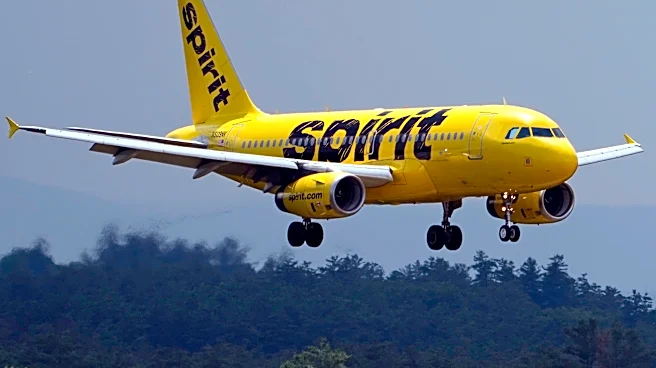
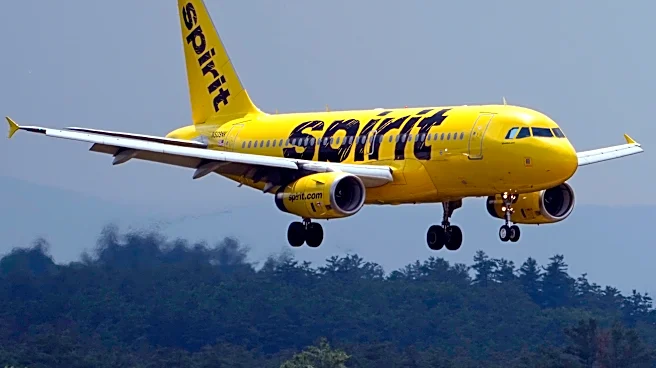
Spirit Airlines has announced the cessation of its operations after failing to secure a government bailout. This decision was confirmed through air traffic control audio recordings, which captured the final
exchanges between controllers and Spirit pilots. The airline, based in Fort Lauderdale, Florida, employed approximately 15,000 people, with about 6,000 based in Florida. The closure marks a significant loss for the airline's workforce, including over 2,000 pilots represented by the Air Line Pilots Association (ALPA). The association expressed that the closure is a devastating blow to the employees who dedicated their careers to the airline. Transportation Secretary Sean Duffy stated that other airlines are offering preferential interviews to displaced Spirit staff.
Why It's Important?
The shutdown of Spirit Airlines is a significant event in the U.S. aviation industry, affecting thousands of employees and potentially impacting the travel plans of many customers. The failure to secure a government bailout highlights the financial vulnerabilities faced by airlines, especially those operating on low-cost models. The closure could lead to reduced competition in the budget airline sector, potentially resulting in higher fares for consumers. Additionally, the loss of jobs for Spirit employees adds to the broader economic challenges, as these individuals now face the uncertainty of finding new employment in a competitive job market.
What's Next?
In the wake of Spirit Airlines' closure, affected employees will be seeking new employment opportunities, with some airlines offering preferential interviews. The aviation industry may see shifts as other carriers potentially absorb Spirit's market share. Customers holding tickets with Spirit will need to seek refunds or alternative travel arrangements. The broader airline industry may also face increased scrutiny regarding financial stability and the need for potential government support in times of crisis.