







What's Happening?
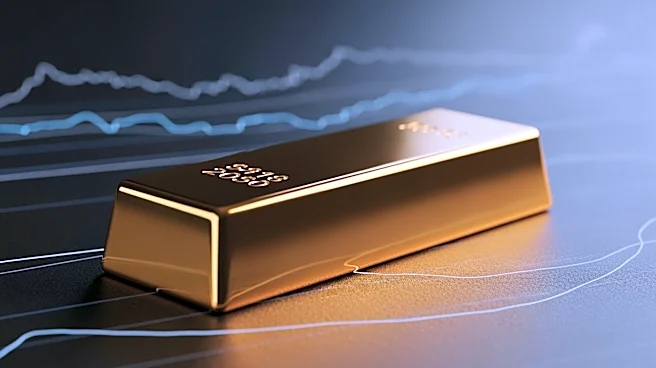
Gold prices have experienced a significant decline, falling to $4,188 per troy ounce, the lowest since November, after reaching a record high of $5,595 in January. This drop is attributed to strong U.S. jobs data, which has increased expectations for
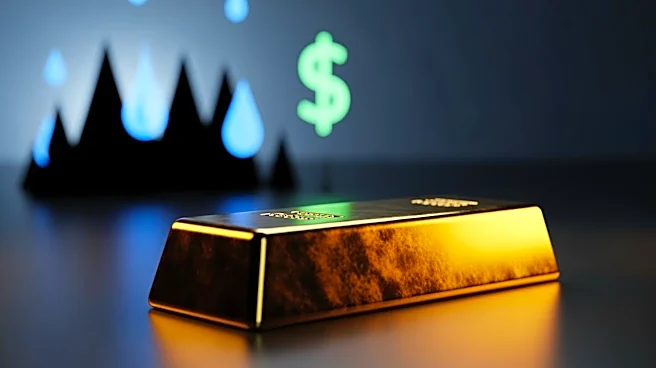
interest rate hikes by the Federal Reserve, and a stronger dollar. The metal's recent rally was driven by central bank purchases and safe-haven demand due to geopolitical tensions and economic uncertainties. However, the current market dynamics, including the Iran conflict and oil price increases, have diminished gold's appeal as a safe haven. Analysts suggest that gold could rebound if geopolitical tensions ease and oil prices decrease.
Why It's Important?
The decline in gold prices reflects broader economic trends and investor sentiment. As interest rates are expected to rise, the opportunity cost of holding non-yielding assets like gold increases, leading to reduced demand. This shift impacts investors and financial markets, particularly those with significant holdings in gold-backed exchange-traded funds (ETFs), which have seen outflows. The situation also highlights the interconnectedness of global events, such as geopolitical conflicts and economic policies, on commodity markets. A continued decline in gold prices could affect mining companies and economies reliant on gold exports.
What's Next?
Market participants will closely monitor the Federal Reserve's actions and geopolitical developments, particularly in the Middle East. Any easing of tensions or changes in oil prices could influence gold's trajectory. Additionally, investors may adjust their portfolios in response to evolving economic conditions, potentially leading to further volatility in gold markets. Analysts will also watch for changes in central bank policies and fiscal deficits, which could impact long-term demand for gold as a safe-haven asset.