





What's Happening?
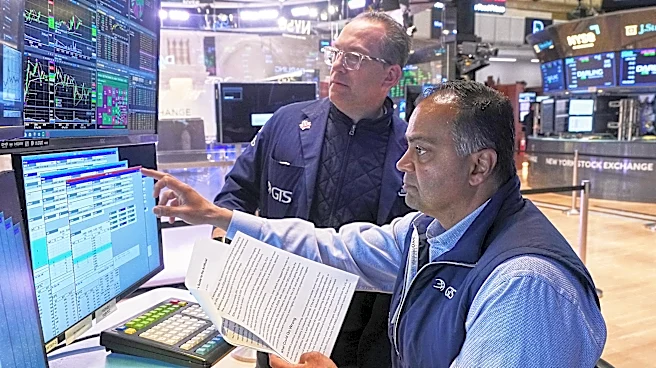
On Tuesday, chip stocks experienced a significant decline, with Qualcomm dropping over 11%, marking its worst session since 2020. Other major semiconductor companies such as Intel, Skyworks Solutions, and Marvell Technology also saw declines of 7%, 5%,
and 4% respectively. The iShares Semiconductor ETF, which tracks the sector, fell by 3%. This downturn followed a hotter-than-expected consumer inflation report, which, coupled with rising oil prices due to the ongoing conflict in Iran, prompted investors to adopt a risk-off approach. The semiconductor sector had previously been buoyed by a rally driven by artificial intelligence (AI) demand, particularly benefiting companies like Nvidia. However, the recent inflation data has shifted investor sentiment, impacting the broader market.
Why It's Important?
The decline in chip stocks is significant as it reflects broader market concerns about inflation and its potential impact on economic stability. The semiconductor industry has been a key driver of technological advancement, particularly with the rise of AI, which has increased demand for chips. The recent pullback could signal a shift in investor confidence, potentially affecting future investments in AI and related technologies. Companies that have heavily invested in AI infrastructure may face challenges if inflation continues to rise, impacting their operational costs and profitability. Additionally, the semiconductor shortage, exacerbated by supply chain disruptions, could further strain the industry, affecting various sectors reliant on these components.
What's Next?
Investors and industry stakeholders will likely monitor inflation trends and geopolitical developments closely, as these factors could influence future market movements. Companies may need to reassess their strategies to mitigate risks associated with rising costs and supply chain challenges. Policymakers might also consider interventions to stabilize the market and support industries affected by inflation. The semiconductor sector's response to these challenges will be crucial in determining its trajectory and the broader impact on technological innovation and economic growth.