

What's Happening?
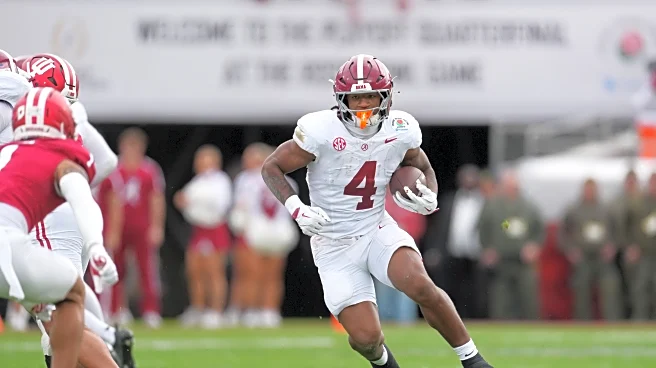
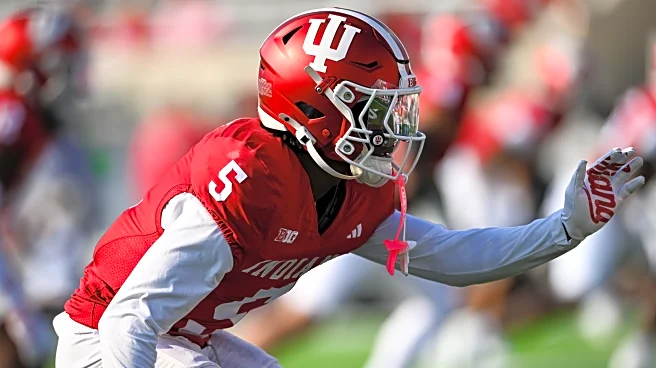
The Indiana Hoosiers, ranked as the top team in the College Football Playoff, are set to compete against the Alabama Crimson Tide in the 2026 Rose Bowl on New Year's Day. Indiana, led by Heisman Trophy-winning quarterback Fernando Mendoza, has had a stellar season, showcasing one of the best defenses in college football. The team enters the game as a seven-point favorite. Alabama, coming off a significant victory over the Oklahoma Sooners, is considered an underdog but has shown potential to challenge Indiana's dominance. The game will be broadcast on ESPN, with Indiana's offense expected to exploit Alabama's secondary, which allowed 307 passing yards in their previous game. Key players for Indiana include wide receivers Charlie Becker, Omar
Cooper Jr., and Elijah Sarratt, who have been instrumental in the team's success.
Why It's Important?
The Rose Bowl matchup between Indiana and Alabama is significant as it could determine the trajectory of both programs. For Indiana, a victory would solidify their status as a powerhouse in college football, potentially influencing recruitment and future playoff considerations. Alabama, traditionally a dominant force, faces the challenge of overcoming injuries and a strong Indiana defense. The outcome of this game could impact the coaching strategies and player development for both teams. Additionally, the performance of Heisman winner Fernando Mendoza will be closely watched, as it could affect his prospects in professional football.
What's Next?
Following the Rose Bowl, the winning team will advance to the national championship game, further elevating their status in college football. For Indiana, a win would enhance their reputation and could lead to increased media attention and recruitment opportunities. Alabama, if victorious, would continue to build on their legacy of success. The game will also influence the future careers of standout players, particularly those eligible for the NFL draft. Both teams will need to strategize effectively to address their respective weaknesses and capitalize on their strengths.