



What's Happening?
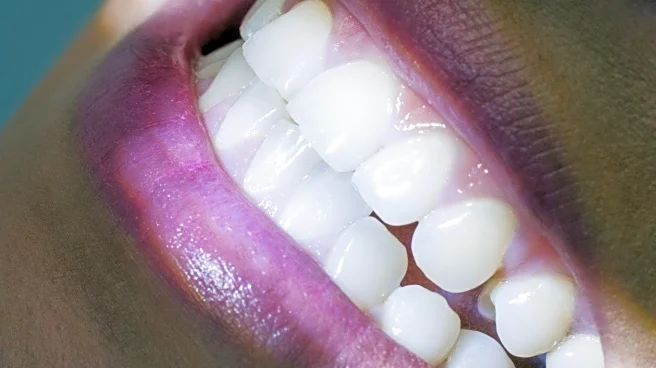
A recent study has examined the aesthetic perception of maxillary incisor inclination in smiling profiles, focusing on different facial divergences. The research involved both orthodontists and laypeople as evaluators to assess the attractiveness of various incisor inclinations. The study found that the inclination of maxillary incisors significantly affects the perceived beauty of a smile, with preferences varying based on facial divergence. In neutral divergence faces, both orthodontists and laypeople preferred a 0° inclination as the most attractive. However, in anterior divergence faces, proclined incisors were favored, with orthodontists preferring a +10° inclination and laypeople a +5° inclination. The study highlights the importance of considering
both professional and lay opinions in orthodontic treatment planning to achieve optimal aesthetic outcomes.
Why It's Important?
The findings of this study are significant for the field of orthodontics as they provide insights into how different groups perceive dental aesthetics. Understanding these preferences can help orthodontists tailor treatments to meet patient expectations and improve satisfaction. The study underscores the need for a harmonious relationship between incisor inclination and facial divergence to enhance smile aesthetics. This research could influence clinical decisions, particularly in cases involving extraction or torque adjustments of maxillary incisors. By aligning treatment plans with aesthetic preferences, orthodontists can potentially improve patient outcomes and satisfaction, which is crucial in a field where subjective perceptions of beauty play a significant role.
What's Next?
Future research could expand on these findings by exploring the impact of maxillary incisor inclinations on smile aesthetics across different facial properties, genders, and races. Such studies could provide a more comprehensive understanding of aesthetic preferences and help refine orthodontic treatment strategies. Additionally, incorporating patient feedback into treatment planning could become a more standard practice, ensuring that clinical outcomes align with patient expectations. As the field of orthodontics continues to evolve, integrating aesthetic considerations with functional outcomes will likely remain a key focus.
Beyond the Headlines
This study highlights the cultural and subjective nature of beauty, emphasizing that aesthetic preferences can vary significantly among different populations. The research also points to the potential for orthodontic treatments to not only improve dental function but also enhance a patient's self-esteem and social interactions. By prioritizing patient preferences and cultural considerations, orthodontists can contribute to a more personalized and patient-centered approach to dental care.