






What's Happening?
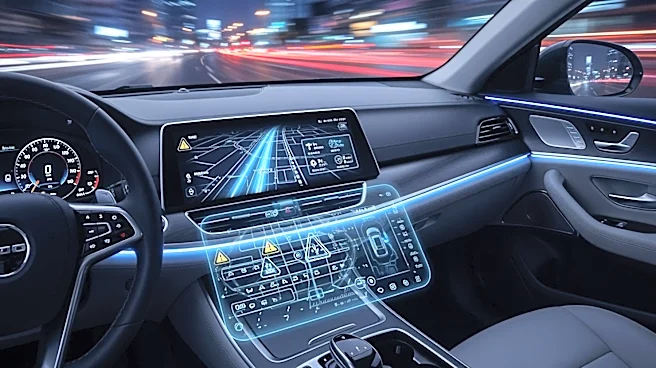
Uber is deploying a fleet of vehicles equipped with autonomous driving hardware as part of its new AV Lab project. These vehicles, while not operating as robotaxis, will be manually driven to collect data for Uber's partners in the autonomous vehicle (AV)
sector. The initiative aims to provide valuable driving data to companies like Wayve, WeRide, Nuro, and Waabi, which are developing their own self-driving technologies. Uber's Chief Financial Officer, Balaji Krishnamurthy, highlighted that the fleet will help expose these vehicles to a variety of 'edge' cases encountered during Uber's 40 million daily trips. The project begins with a single Hyundai Ioniq 5, with plans to expand and generate at least 2 million miles of data each month by the end of the year.
Why It's Important?
This initiative marks a significant step for Uber in the autonomous vehicle industry, as it shifts from developing its own self-driving technology to supporting other AV developers. By providing free access to driving data, Uber is positioning itself as a key facilitator in the AV ecosystem, potentially accelerating the development and deployment of autonomous vehicles. This move could benefit smaller AV startups that lack the financial resources of industry giants like Waymo and Tesla. The data collected will help these companies refine their technologies and bring their products to market more efficiently, potentially transforming urban transportation and reducing reliance on human drivers.
What's Next?
Uber plans to scale its data collection efforts, with the AV Lab fleet expected to generate more data in the coming years. As the project expands, Uber's partners will likely use the data to enhance their autonomous driving systems, moving closer to launching commercial AV services. The success of this initiative could lead to increased collaboration between Uber and AV developers, fostering innovation and competition in the self-driving car market. Additionally, regulatory bodies may need to address new challenges related to data sharing and privacy as the industry evolves.