

What's Happening?
The article explores the effectiveness of bodyweight exercises in building muscle and improving strength. Bodyweight exercises, such as air squats and planks, are highlighted for their accessibility and convenience, allowing individuals to perform them
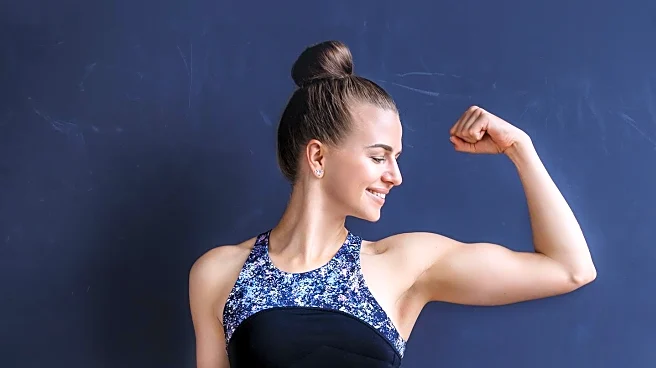
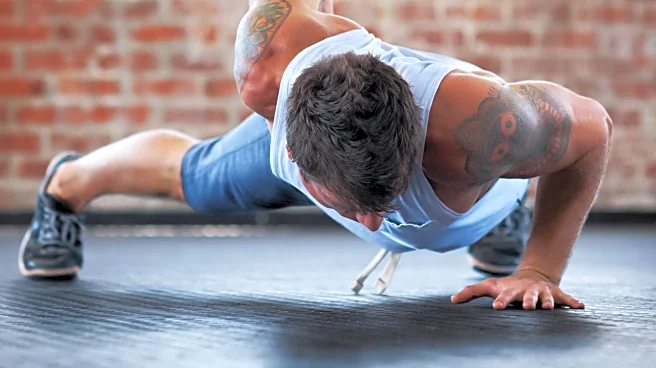
without equipment or much space. Experts like Kristie Larson, CSCS, and Meredith Witte, MS, CSCS, provide insights into how these exercises can vary in difficulty and effectiveness. While some exercises like push-ups can be challenging due to the significant body mass they require to support, others like bodyweight biceps curls may not provide enough resistance to stimulate muscle growth. The article emphasizes the importance of progressive overload, a training strategy that involves increasing the difficulty of exercises to continue gaining strength. This can be achieved by altering exercise variations, tempo, or form, and by increasing repetitions and sets.
Why It's Important?
Understanding the potential of bodyweight exercises is crucial for individuals seeking accessible and cost-effective fitness solutions. These exercises offer a viable option for those who may not have access to gym equipment or prefer to work out at home. The insights provided by fitness experts highlight the need for proper technique and progressive overload to maximize the benefits of bodyweight workouts. This information is particularly valuable for beginners or those recovering from injuries, as it underscores the importance of tailoring workouts to individual fitness levels and goals. Additionally, the discussion on the limitations of bodyweight exercises for muscle growth can guide individuals in making informed decisions about incorporating additional resistance training into their routines.
What's Next?
For individuals interested in maximizing the benefits of bodyweight exercises, the next steps involve incorporating progressive overload techniques into their routines. This may include experimenting with different exercise variations, adjusting the tempo of movements, and focusing on proper form to target specific muscle groups effectively. As individuals progress, they may consider integrating additional resistance, such as weights or resistance bands, to continue challenging their muscles and promoting growth. Fitness enthusiasts and trainers may also explore creating personalized workout plans that combine bodyweight exercises with other forms of strength training to achieve comprehensive fitness goals.
Beyond the Headlines
The discussion on bodyweight exercises also touches on broader themes of accessibility and inclusivity in fitness. By highlighting the potential of these exercises to be performed anywhere without equipment, the article underscores the democratization of fitness, making it more accessible to diverse populations. This approach aligns with the growing trend of at-home workouts and the increasing demand for flexible fitness solutions. Additionally, the emphasis on progressive overload and proper technique reflects a shift towards more personalized and informed fitness practices, encouraging individuals to take control of their health and wellness journeys.