




What's Happening?
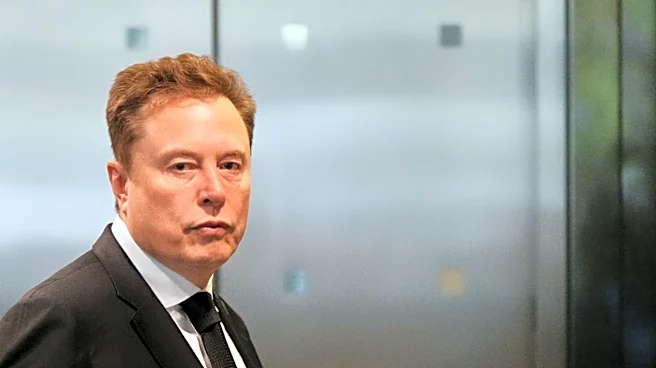
Sam Altman, CEO of OpenAI, has emerged victorious in a legal battle against Elon Musk, who had filed a lawsuit claiming that OpenAI violated an agreement to operate solely as a nonprofit. The lawsuit, which sought $150 billion in damages, was dismissed
by a California jury on the grounds that it was filed beyond the statute of limitations. Musk, who co-founded OpenAI in 2015 but left in 2018, accused Altman and co-founder Greg Brockman of breaching a charitable trust. The trial highlighted the breakdown of Musk and Altman's relationship, once close but now strained. The jury's decision allows OpenAI to continue its operations without the looming threat of Musk's claims.
Why It's Important?
The dismissal of Musk's lawsuit is significant for OpenAI as it removes a major legal hurdle, allowing the company to focus on its growth and potential future plans, such as an IPO. The case also underscores the complexities of transitioning from a nonprofit to a for-profit model in the tech industry, a move that can lead to legal and ethical challenges. For Musk, the loss highlights the risks of delayed legal action and the importance of timely litigation. The outcome may influence how tech companies structure their governance and operational models, especially when transitioning between nonprofit and for-profit statuses.
What's Next?
Musk has announced plans to appeal the jury's decision, which could prolong the legal battle and continue to draw public attention. The appeal process may further explore the legal nuances of charitable trust breaches and the responsibilities of tech founders. Meanwhile, OpenAI is likely to proceed with its strategic initiatives, potentially including an IPO, as it capitalizes on the legal victory. The case may also prompt other tech companies to reassess their legal strategies and governance structures to avoid similar disputes.