



What's Happening?
As the countdown to the 2026 World Cup continues, attention is drawn to the significance of fair play points in determining group stage outcomes. During the 2018 World Cup, Senegal and Japan were tied on points, goals scored, and goal differential, leading
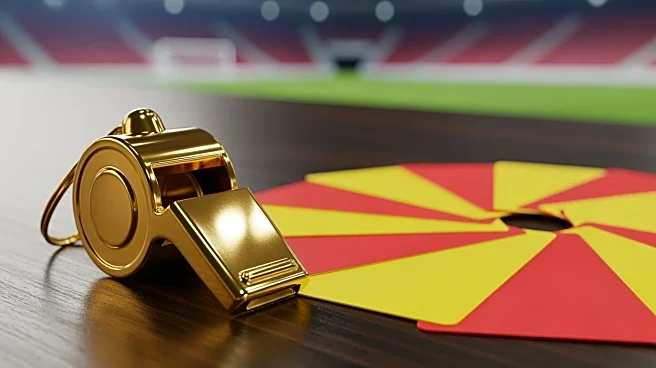
to the use of fair play points as a tiebreaker. Japan advanced to the knockout rounds due to having fewer yellow cards than Senegal. This system, which penalizes teams for yellow and red cards, highlights the importance of discipline and sportsmanship in international soccer tournaments.
Why It's Important?
The use of fair play points as a tiebreaker emphasizes the role of discipline in sports, where even minor infractions can have significant consequences. This system encourages teams to maintain composure and adhere to the rules, impacting team strategies and player behavior. The fair play rule can influence the outcome of matches and the progression of teams in major tournaments, affecting national pride and the financial implications of advancing in the competition.
What's Next?
As the 2026 World Cup approaches, teams may place greater emphasis on discipline and fair play to avoid elimination based on card accumulation. Coaches and players might focus on strategies to minimize fouls and maintain a clean record. FIFA could also review and potentially adjust the fair play system to ensure it remains a fair and effective tiebreaker method.