





What's Happening?
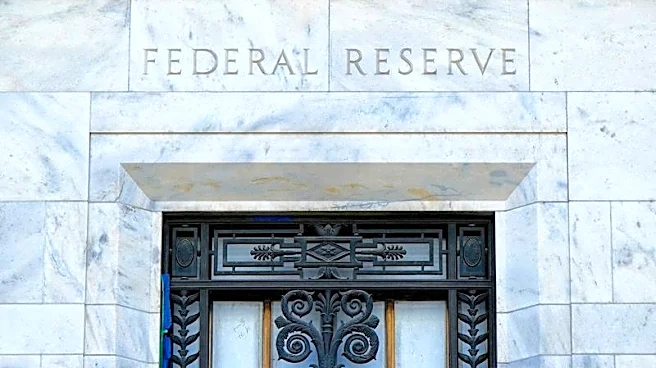
Federal Reserve Bank of New York President John Williams has stated that Jerome Powell will continue to lead the Federal Open Market Committee (FOMC) despite delays in confirming Kevin Warsh as the new Federal Reserve leader. President Trump nominated
Warsh to succeed Powell, whose term ends in May. However, Warsh's confirmation is stalled due to a Department of Justice investigation into cost overruns at the Fed's headquarters. This investigation has led to a key Senate Republican delaying Warsh's confirmation until the probe concludes. Williams emphasized that there is no issue with continuity in the FOMC's leadership, as Powell will remain in charge until a new leader is confirmed. Williams also expressed confidence in Warsh's understanding of the Federal Reserve's mission.
Why It's Important?
The leadership of the Federal Reserve is crucial for setting U.S. monetary policy, which impacts interest rates, inflation, and overall economic stability. The delay in confirming a new Fed leader could create uncertainty in financial markets and among economic stakeholders. Powell's continued leadership ensures stability and continuity in monetary policy during this transitional period. However, the ongoing investigation and its implications for Warsh's confirmation could affect the Fed's ability to respond to economic challenges. The situation highlights the intersection of politics and monetary policy, as the Trump administration's influence on the Fed's leadership could shape future economic decisions.
What's Next?
The confirmation of Kevin Warsh as the new Fed leader remains uncertain, pending the outcome of the Department of Justice investigation. If the investigation is prolonged, Powell may continue to serve as chair pro tem beyond his term. The Senate's decision on Warsh's confirmation will be closely watched by financial markets and policymakers. Additionally, Warsh's potential leadership style and policy priorities will be scrutinized, especially given concerns about his possible deference to the Trump administration's preferences for lower interest rates.