






What's Happening?
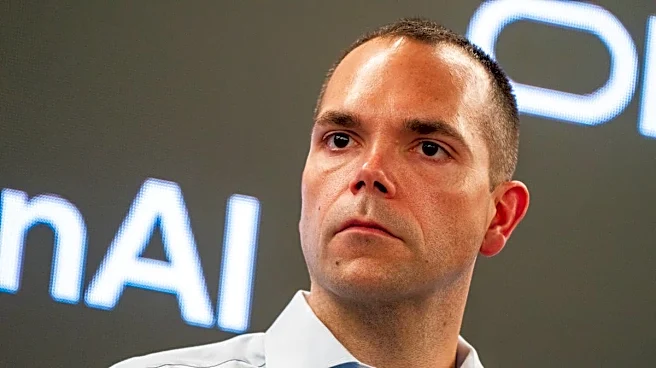
Orlando Bravo, the billionaire founder of Thoma Bravo, a software-focused private equity firm, is leveraging artificial intelligence (AI) to reduce the workload of junior associates. Traditionally, these employees have been tasked with time-consuming
duties such as building models and pitch decks, often working late into the night. Bravo stated that AI allows him to perform tasks quickly at midnight, reducing the need to disturb junior employees during off-hours. This shift enables associates to focus on higher-order thinking and investing, potentially accelerating their professional development. Despite concerns that AI might reduce the demand for junior employees, Bravo argues that the technology is a productivity tool rather than a replacement. He emphasized that his firm, which employs around 220 people, is actually looking to hire more staff, as AI allows associates to engage more with clients and develop relationships with CEOs.
Why It's Important?
The integration of AI in the workplace, particularly in high-pressure environments like Wall Street, signifies a shift in how entry-level roles are perceived and executed. By automating routine tasks, AI can enhance productivity and provide junior employees with opportunities to engage in more complex and rewarding projects. This could lead to faster career progression and skill development. However, the broader implications for employment remain a topic of debate. While Bravo's approach suggests a positive outcome, where AI complements human work, there are concerns about potential job displacement in other sectors. The financial industry, known for its demanding work culture, could see significant changes in how work is distributed and valued, potentially influencing hiring practices and employee expectations.
What's Next?
As AI continues to evolve, its role in reshaping job functions and industry practices will likely expand. Companies may increasingly adopt AI to optimize operations, leading to a reevaluation of workforce needs and training programs. In the financial sector, firms might follow Bravo's lead, using AI to enhance productivity while maintaining or even increasing their workforce. However, this transition will require careful management to ensure that employees are equipped with the necessary skills to thrive in an AI-augmented environment. Additionally, industry leaders and policymakers will need to address the ethical and economic implications of AI integration, balancing technological advancement with job security and workforce development.