



What's Happening?
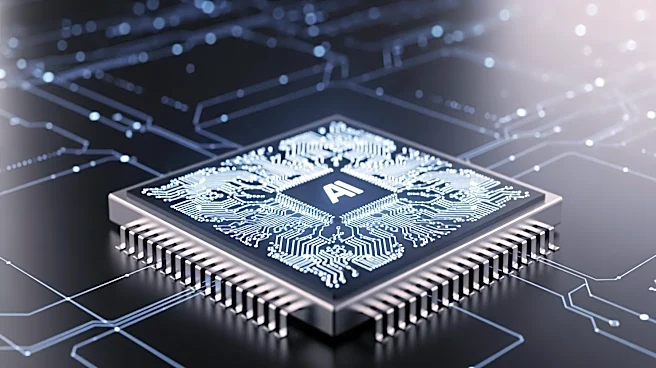
XCENA, a startup with operations in South Korea and the U.S., has raised $135 million in a Series B funding round to address inefficiencies in AI infrastructure. The company is developing a chip that integrates compute capabilities closer to DRAM, the fast
memory used by processors, to reduce the costly data relay between CPUs, GPUs, and memory. This approach aims to handle routine data operations near memory, potentially reducing the need for multiple servers. The funding round was co-led by Seoul-based VC firms Altinum and IMM Investment, with participation from Corstone Asia and existing investors SBI Investment and Mirae Asset Capital. XCENA's chip, the MX1, is designed to connect to CPUs via Compute Express Link (CXL), allowing data processing within the memory module itself. The company plans to begin mass production by the end of 2026.
Why It's Important?
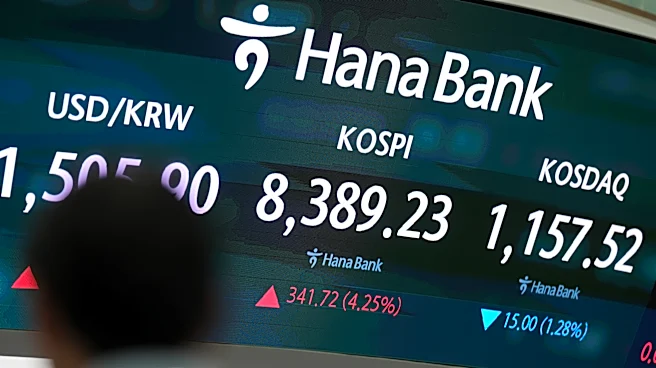
The development of XCENA's chip could significantly impact AI infrastructure costs by improving memory efficiency. As AI applications grow, the demand for more efficient memory solutions becomes critical. By reducing the need for extensive server infrastructure, XCENA's technology could lead to substantial cost savings for hyperscalers investing heavily in AI. This shift towards memory-centric architectures is underscored by the recent rise in memory prices and the valuation of major memory chip companies like Samsung, SK Hynix, and Micron. XCENA's innovation could position it as a key player in the evolving AI landscape, challenging established companies like Marvell and Astera Labs.
What's Next?
XCENA is in early discussions with global memory vendors to further its technology's reach. The company aims to target hyperscalers that spend billions annually on AI infrastructure, where even minor improvements in memory efficiency can translate into significant financial savings. The MX1 chip is currently a prototype, with mass production expected to commence by the end of 2026. XCENA anticipates generating revenue starting in 2027, as it continues to refine its technology and expand its market presence.