






What's Happening?
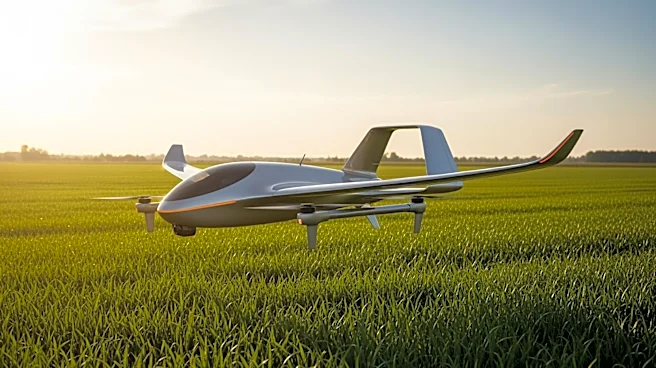
Pyka, a robotics company specializing in autonomous aircraft, and the Foundation for California Community Colleges have been awarded a grant by the California Air Resources Board (CARB) and the California Energy Commission (CEC) to demonstrate commercial-scale
zero-emission aviation in California agriculture. The project will utilize Pyka's all-electric autonomous Pelican 2 aircraft, operating under Federal Aviation Administration approvals at Victoria Island Farms in California's Sacramento–San Joaquin Delta. The initiative aims to showcase the viability of zero-emission aviation, powered primarily by off-grid solar charging systems, with additional support from zero-emission ground-support vehicles. This collaboration involves industry, agriculture, and workforce development partners, including Ogive Technology, Inc., NPower California, and the Bay Area Community College Consortium.
Why It's Important?
The project represents a significant step towards reducing greenhouse gas emissions in the aviation sector, traditionally one of the most challenging to electrify. By displacing conventional fossil-fuel-powered crop dusters and diesel agricultural equipment, the initiative is expected to cut emissions by over 1,000 metric tons of carbon dioxide, along with reductions in nitrogen oxides and particulate matter. The project also aims to improve air quality and public health, particularly in disadvantaged communities, while advancing California's climate, equity, and technology goals. Additionally, the initiative includes a workforce development program to prepare residents for skilled jobs in zero-emission aviation manufacturing and operations, promoting economic and social mobility.
What's Next?
The project will collect detailed operational data to support reporting to CARB and the CEC, informing future policy development and regulatory pathways. The model is designed to be scalable across California's agricultural sector and adaptable to other aviation uses, such as cargo logistics. Broader deployment could amplify long-term emissions reductions statewide and beyond, demonstrating California's leadership in tackling decarbonization challenges. The initiative also aims to build pathways into high-quality clean jobs in agriculture and aviation, reflecting the state's commitment to innovative technologies and workforce development.
Beyond the Headlines
The project highlights the potential for zero-emission aviation to transform agricultural practices, reducing noise pollution and improving application precision, which can lower chemical use and spray drift in nearby communities. It underscores the importance of collaboration between technology developers, educational institutions, and government agencies in advancing sustainable solutions. The initiative also reflects a broader trend towards integrating environmental and economic objectives, demonstrating that clean aviation is not only feasible but capable of outperforming polluting alternatives in terms of safety, efficiency, and community outcomes.