



What's Happening?
The global urban farming market is anticipated to grow significantly, reaching USD 311.24 billion by 2032, according to DataM Intelligence. This growth is driven by rapid urbanization, increasing demand for fresh, locally grown produce, and concerns over food security and supply chain sustainability. Technological advancements in vertical farming, hydroponics, and aquaponics, along with supportive government initiatives, are further accelerating market expansion. North America leads the market with a 34.2% share, bolstered by advanced infrastructure and strong government support for innovative practices like vertical farming.
Why It's Important?
The expansion of the urban farming market is crucial for addressing food security challenges in rapidly urbanizing areas.
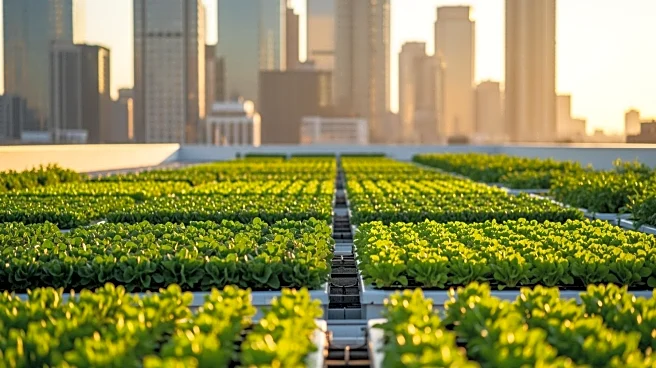
By reducing reliance on traditional supply chains, urban farming can provide fresh produce with lower transportation costs and environmental impact. This shift supports sustainable food systems and aligns with consumer demand for eco-friendly practices. The market's growth also presents opportunities for technological innovation and economic development, particularly in urban centers where space is limited and traditional agriculture is not feasible.
What's Next?
As the urban farming market continues to grow, further advancements in technology and increased government support are expected. Companies may invest more in research and development to enhance efficiency and yield. Additionally, urban farming could become a key component of city planning, integrating with other sustainable practices to create resilient urban environments. Stakeholders, including policymakers and businesses, will likely focus on expanding infrastructure and creating favorable regulatory environments to support this growth.