




What's Happening?
The global agricultural textiles market is anticipated to grow significantly, reaching a valuation of $24.5 billion by 2032, up from $16.1 billion in 2024. This growth is driven by the increasing adoption of sustainable and precision farming practices,
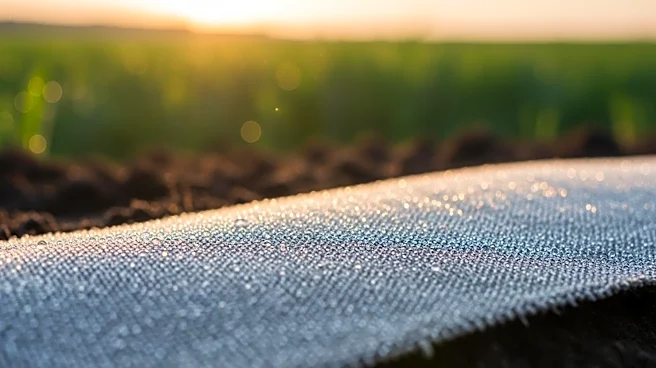
as well as the rising demand for advanced crop protection solutions. The market includes specialized textiles such as shade nets, mulch mats, and crop protection materials, which are essential for enhancing productivity and managing climate variability. The Asia-Pacific region is expected to witness the highest growth due to its expanding agricultural sector and supportive government policies promoting agricultural modernization.
Why It's Important?
The expansion of the agricultural textiles market is crucial in addressing the challenges posed by climate change and the increasing global food demand. As climate variability continues to impact agricultural productivity, the demand for textiles that offer protection against UV exposure, pests, and extreme weather is rising. This market growth supports the transition towards more sustainable agricultural practices, which are essential for ensuring food security. Additionally, the development of recyclable and biodegradable textile materials aligns with global sustainability goals, offering long-term benefits for both the environment and the agricultural industry.
What's Next?
As the market grows, manufacturers are likely to focus on innovation in recyclable and biodegradable materials to meet sustainability targets. The Asia-Pacific region, with its large agricultural base and supportive policies, presents significant opportunities for expansion. Companies investing in regional manufacturing and distribution capabilities can expect strong long-term growth. Furthermore, government subsidies and programs promoting sustainable agriculture will continue to drive the adoption of advanced textile solutions, enhancing productivity and resilience in the face of climate challenges.