






What's Happening?
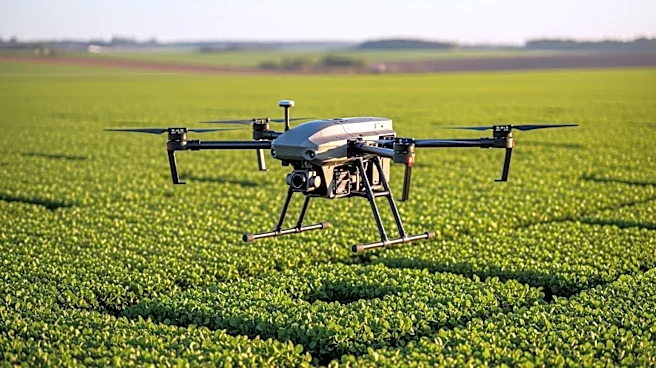
Variable Rate Technology (VRT) in agriculture is gaining traction as a method to enhance productivity and sustainability. VRT utilizes data-driven tools such as sensors, GPS, and maps to optimize the application of seeds, fertilizers, and irrigation.
This technology allows farmers to tailor their approach to each part of their fields, maximizing yield and reducing waste. The market for VRT is projected to grow significantly, driven by major players like Deere & Company and Trimble Inc. The technology is divided into map-based and sensor-based systems, each offering distinct advantages in precision agriculture. Map-based VRT uses detailed maps to guide resource application, while sensor-based VRT employs real-time monitoring to dynamically adjust inputs based on current conditions.
Why It's Important?
The adoption of Variable Rate Technology represents a significant advancement in agricultural practices, offering economic and environmental benefits. By optimizing resource use, VRT reduces costs for farmers and minimizes environmental impact, aligning with sustainable farming goals. The technology's ability to enhance productivity is crucial in meeting the rising global demand for food, especially in the face of climate change and unpredictable weather patterns. As the market for VRT expands, it promises to transform agriculture into a more efficient and sustainable industry, contributing to global food security and economic growth.