




What's Happening?
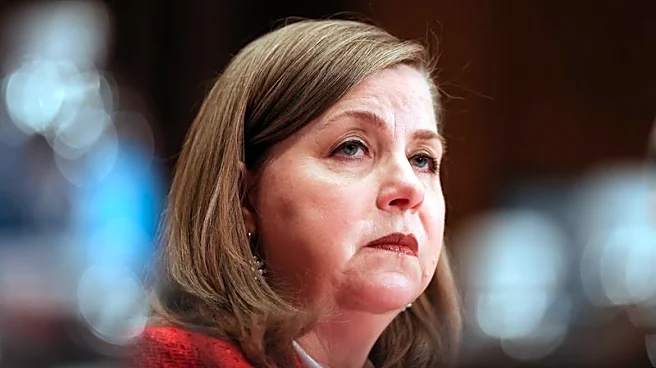
Federal Reserve Vice Chair for Supervision Michelle Bowman has indicated that the ongoing Middle East conflict could lead to persistent inflation, necessitating tighter monetary policy. Bowman expressed optimism that post-conflict, supply disruptions
would be temporary, with minimal impact on economic activity. However, she cautioned that prolonged disruptions could broaden inflationary pressures, potentially altering the Federal Reserve's approach to monetary policy. Currently, the Fed is expected to maintain its benchmark interest rate between 3.50% and 3.75% at the upcoming policy meeting. The central bank has moved away from predictions of rate cuts due to the spike in energy prices, with some officials speculating about possible rate hikes.
Why It's Important?
The potential shift in monetary policy due to extended energy shocks is significant for the U.S. economy, as it could lead to higher interest rates, affecting borrowing costs for businesses and consumers. Persistent inflation above the Fed's 2% target complicates economic planning and could impact financial markets, which are sensitive to interest rate changes. Businesses may face increased costs, potentially leading to reduced investment and slower economic growth. Consumers could experience higher prices, affecting purchasing power and overall economic activity. The Federal Reserve's decisions will be closely watched by stakeholders across various sectors.
What's Next?
The Federal Reserve's upcoming policy meeting will be crucial in determining the direction of interest rates. If inflationary pressures continue, the Fed may consider rate hikes, impacting financial markets and economic growth. Stakeholders, including businesses and consumers, will need to prepare for potential changes in borrowing costs and economic conditions. Policymakers will monitor the situation closely, assessing the impact of the Middle East conflict on inflation and economic activity. The Fed's approach to managing inflation will be pivotal in shaping the economic landscape in the coming months.