








What's Happening?
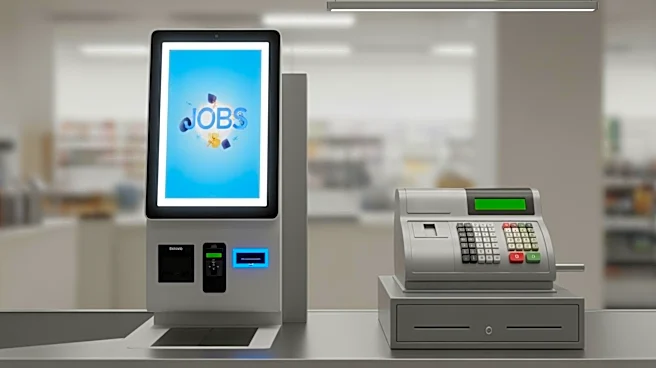
The Santa Ana City Council has unanimously passed the 'Safe Stores are Staffed Stores' ordinance, which imposes strict regulations on the use of automated self-checkout systems in local supermarkets and pharmacies. This ordinance requires grocery stores
larger than 15,000 square feet and drug retail locations to maintain a specific ratio of employees to self-checkout machines. Specifically, these businesses must have at least one employee monitoring every three self-checkout kiosks and ensure that a traditional, human-staffed checkout lane is open whenever self-checkout kiosks are in operation. The ordinance is designed to curb retail theft and protect local jobs by ensuring that human staffing levels are maintained alongside automated kiosks. Labor organizations, such as the United Food and Commercial Workers (UFCW) Local 324, have supported the measure, emphasizing the need for human interaction to assist vulnerable customer groups and prevent long delays.
Why It's Important?
The ordinance represents a significant move in the ongoing debate over automation in retail environments. By mandating human oversight of self-checkout systems, the Santa Ana City Council aims to balance technological advancement with job preservation. This decision could have broader implications for retail operations across the U.S., as it challenges the trend of increasing automation in the industry. Labor unions view the ordinance as a victory for workers, arguing that it prevents the complete replacement of human jobs by machines. However, critics, including the California Retailers Association, argue that the ordinance could lead to higher operating costs for retailers, which may be passed on to consumers in the form of higher prices. This tension highlights the complex dynamics between technological innovation, labor rights, and consumer costs.
What's Next?
The ordinance is set to take effect in 30 days, and its implementation will be closely watched by both supporters and opponents. Retailers will need to adjust their staffing models to comply with the new regulations, which may involve hiring additional staff or reallocating existing employees. The effectiveness of the ordinance in reducing theft and maintaining job levels will likely be evaluated over time. Additionally, other cities may look to Santa Ana's approach as a model for addressing similar concerns in their jurisdictions. The response from major retail chains and their compliance with the new rules will be critical in determining the ordinance's impact on the local economy and consumer experience.