


What's Happening?
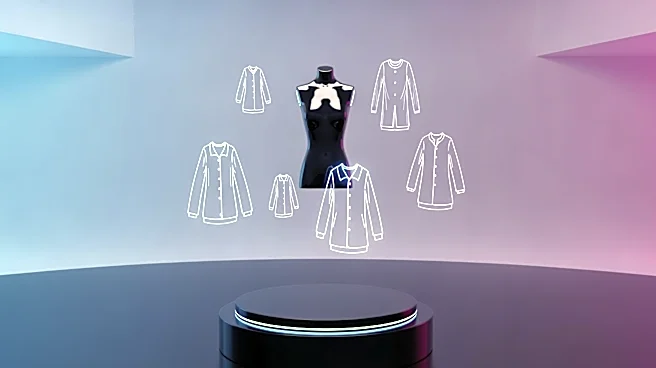
Victoria Beckham has collaborated with DressX to introduce an AI-powered virtual try-on tool aimed at enhancing the online shopping experience for customers. This tool allows shoppers to visualize how garments from Victoria Beckham's collections would
look on their personalized 3D avatars. The initiative is part of a broader trend in the fashion industry towards 'phygital' experiences, which blend physical and digital shopping elements. The technology is designed to reduce sizing uncertainty and improve customer retention by offering a more informed and confident shopping experience. According to DressX, users engaging with virtual try-on features experience a tenfold increase in conversion rates and significantly higher long-term retention. This partnership reflects a commitment to maintaining luxury aesthetics while scaling personalization in the e-commerce space.
Why It's Important?
The introduction of AI-powered virtual try-on tools in fashion e-commerce represents a significant shift towards more personalized and interactive online shopping experiences. This technology not only addresses common issues like sizing uncertainty but also enhances customer engagement and retention. For the fashion industry, which demands high visual accuracy and attention to detail, such innovations can bridge the gap between high-end creative standards and functional commerce. By improving conversion rates and customer loyalty, brands like Victoria Beckham can potentially increase their market share and profitability. Moreover, this move highlights the growing importance of integrating advanced technologies in retail to meet evolving consumer expectations and stay competitive in a digital-first world.
What's Next?
As the fashion industry continues to embrace digital innovations, other brands may follow suit by adopting similar AI-driven tools to enhance their e-commerce platforms. The success of Victoria Beckham's partnership with DressX could encourage more collaborations between fashion brands and tech companies, leading to further advancements in virtual shopping experiences. Additionally, as consumers become more accustomed to these technologies, there may be increased demand for even more sophisticated and personalized shopping solutions. Retailers will need to continuously innovate to keep pace with these trends and maintain customer satisfaction.