


What's Happening?
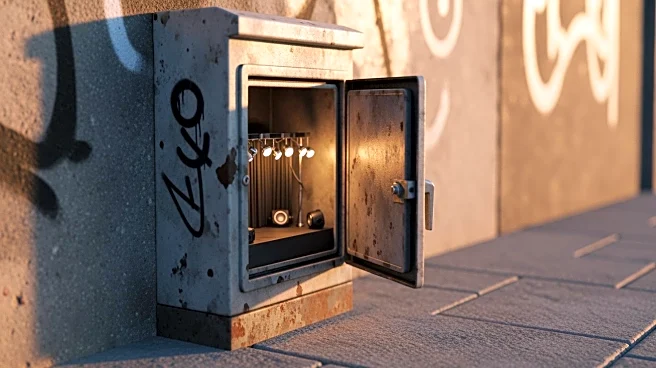
S.C. Mero, a street artist known for her guerrilla art installations, has created a unique theater disguised as an electrical box in downtown Los Angeles. This innovative performance space, located in the Arts District, is designed to look like a real
electrical box, complete with a red velvet door and crimson wallpaper. Mero's creation aims to provide a platform for experimental artists who lack traditional outlets in the area. The theater has already hosted performances by musicians and poets, transforming the sidewalk into a communal stage. Mero's work often includes whimsical elements and hidden social commentary, and this project is no exception. The theater is situated near the historic American Hotel and is intended to erase boundaries between performers and audiences, offering an inviting space for artistic expression.
Why It's Important?
The creation of the Electrical Box Theatre by S.C. Mero highlights the ongoing transformation and challenges faced by the arts community in downtown Los Angeles. As traditional venues become more commercialized, spaces like Mero's theater offer a vital outlet for experimental and non-commercial art forms. This initiative reflects a broader trend of artists seeking alternative spaces to showcase their work, fostering creativity and community engagement. The project also underscores the importance of preserving the cultural and historical identity of downtown L.A., which has seen significant changes in recent years. By providing a platform for diverse artistic voices, Mero's theater contributes to the cultural vibrancy and inclusivity of the neighborhood.
What's Next?
The future of the Electrical Box Theatre remains uncertain, as it operates without official permits and could face scrutiny from city authorities. Mero acknowledges the impermanence of street art and the potential for her creation to be removed or altered. However, she hopes the theater will continue to serve as a conversation piece between artists and the community. As more attention is drawn to the project, it may inspire similar initiatives, encouraging artists to explore unconventional spaces for their work. The theater's success could also prompt discussions about the need for more accessible and affordable venues for experimental art in urban areas.
Beyond the Headlines
Mero's theater project raises questions about the role of public art in urban environments and the balance between regulation and artistic freedom. The lack of permits for the Electrical Box Theatre highlights the challenges faced by artists who operate outside traditional frameworks. This situation prompts a broader conversation about the need for policies that support creative expression while ensuring public safety and accessibility. Additionally, the theater's presence in downtown L.A. reflects the area's ongoing struggle to maintain its cultural identity amid gentrification and commercial pressures. Mero's work serves as a reminder of the importance of preserving spaces for artistic experimentation and community engagement.