





What's Happening?
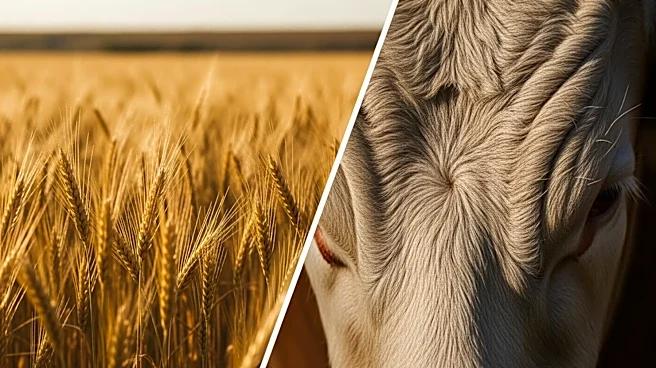
The Federal Reserve Bank of Kansas City has released reports indicating a split in the U.S. agricultural economy, particularly in Oklahoma, where the industry is divided between crop production and cattle rearing. While crop farmers are struggling to
turn a profit due to erratic commodity, energy, and fertilizer markets, cattle ranchers are benefiting from high beef prices. The value of farmland remains strong, supported by government payments, and there is an increase in livestock loans. In Oklahoma, where 50% of farm revenues come from cattle production, the agricultural economy is more stable compared to other crop-heavy states. However, there is concern for crop-exclusive producers facing economic challenges.
Why It's Important?
The divergence in Oklahoma's agricultural economy highlights the broader challenges facing U.S. agriculture, where different sectors experience varying levels of stability and profitability. The high beef prices, while beneficial for cattle ranchers, lead to increased costs for consumers. The reliance on government payments and the strong value of farmland provide some stability, but the uncertainty in crop markets poses risks. This situation underscores the need for diversified agricultural practices and policies that can support both crop and livestock producers, ensuring economic resilience in rural communities.
What's Next?
As the agricultural economy continues to navigate these challenges, stakeholders may need to explore strategies for diversification and risk management. Policymakers could consider measures to stabilize crop markets and support crop-exclusive producers. The ongoing high demand for beef suggests that cattle ranchers may continue to see profitability, but they must also prepare for potential market fluctuations. The agricultural sector's response to these dynamics will be crucial in shaping the future economic landscape of rural areas like Oklahoma.