
What's Happening?
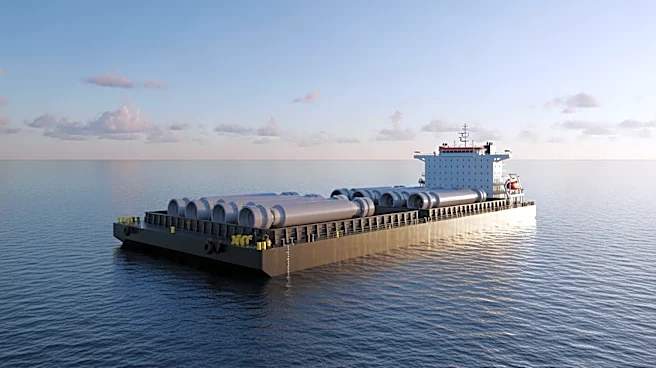
Researchers from SINTEF, in collaboration with Aker Solutions, Sarens, and BOA, are testing a new method to transport and install substructures for fixed offshore wind turbines using an unusually wide
barge. This barge, measuring 166 meters in length and over 73 meters in width, is designed to carry several substructures simultaneously, potentially eliminating the need for large crane vessels. The tests, conducted at SINTEF’s Ocean Basin in Trondheim, aim to determine the feasibility of transporting and erecting two substructures at once. The barge can be lowered to a depth of over 30 meters, allowing the cargo to be floated out or lifted using smaller vessels. Initial tests have shown promising results, aligning with prior numerical analyses.
Why It's Important?
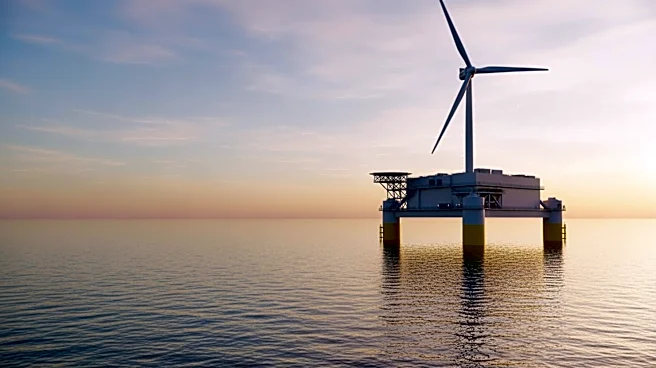
The development of this wide barge could significantly impact the offshore wind industry by reducing reliance on the limited number of vessels capable of lifting heavy turbine substructures. This innovation could lower costs and increase efficiency in turbine installation, making offshore wind projects more viable and attractive. The success of this project could also bolster the Norwegian supplier industry, enhancing its competitiveness both nationally and internationally. By providing a more accessible and cost-effective solution, this technology could accelerate the adoption of offshore wind energy, contributing to global renewable energy goals.
What's Next?
Further work is needed to refine the unloading and positioning process of the substructures on the seabed. The project team will continue testing to optimize the barge's capabilities and ensure it can handle various wave conditions. If successful, this method could be adopted widely, influencing future offshore wind projects and potentially leading to new standards in the industry. Stakeholders in the renewable energy sector will likely monitor these developments closely, as they could offer new opportunities for cost savings and efficiency improvements.