







What's Happening?
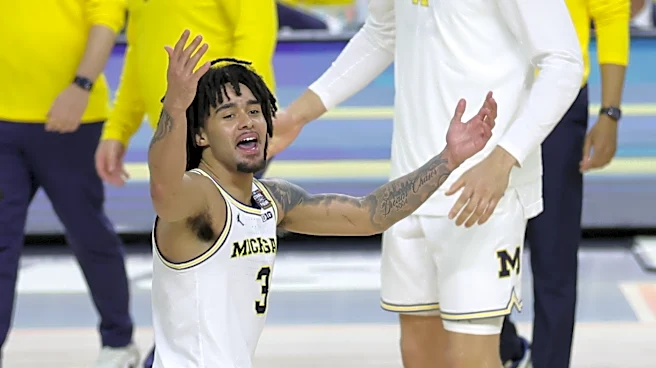
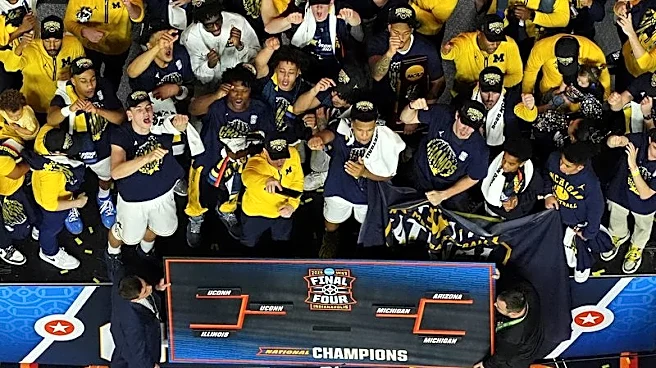
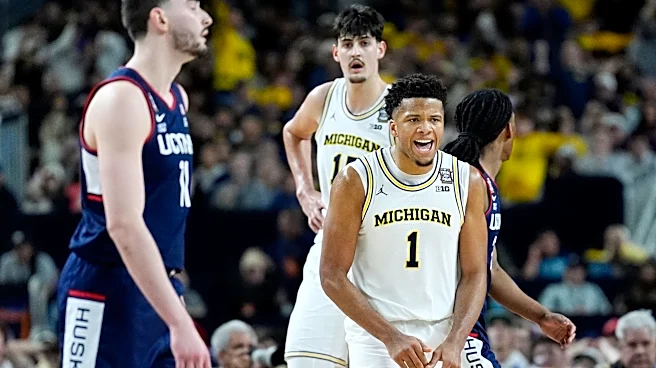
The Michigan Wolverines clinched the NCAA basketball championship with a 69-63 victory over the UConn Huskies. The game was marked by strategic plays and pivotal moments that shifted the momentum in Michigan's favor. UConn initially implemented a strategy
to disrupt Michigan's high-scoring offense, which had been averaging 87.8 points per game. This approach was effective early on, allowing UConn to lead 24-23 with just over three minutes left in the first half. However, a flagrant foul by UConn's Alex Karaban on Michigan's Morez Johnson Jr. changed the game's trajectory. The foul resulted in two free throws and possession for Michigan, leading to a four-point play that helped Michigan take a 33-29 lead into halftime. Key performances by Michigan players, including Elliot Cadeau and Yaxel Lendeborg, further extended their lead in the second half, ultimately securing the championship.
Why It's Important?
This victory marks Michigan's second NCAA championship, highlighting the team's resilience and strategic prowess. The win is significant for Michigan's basketball program, reinforcing its status as a powerhouse in college basketball. For UConn, the loss underscores the challenges of maintaining defensive strategies against high-caliber teams. The game also showcased the impact of critical fouls and strategic plays in determining the outcome of high-stakes matches. This championship win could influence recruiting and future game strategies for both teams, as well as impact the broader landscape of college basketball by setting a precedent for how teams approach high-pressure games.
What's Next?
Following their championship win, Michigan will likely focus on maintaining their competitive edge in future seasons. This includes recruiting top talent and refining their strategies to defend their title. UConn, on the other hand, may reassess their defensive strategies and player development to improve their performance in future tournaments. The outcome of this game could also influence other teams in the NCAA, prompting them to analyze Michigan's successful strategies and adapt accordingly. Additionally, the NCAA may review officiating standards and the impact of fouls on game outcomes, potentially leading to changes in how games are officiated in the future.