






What's Happening?
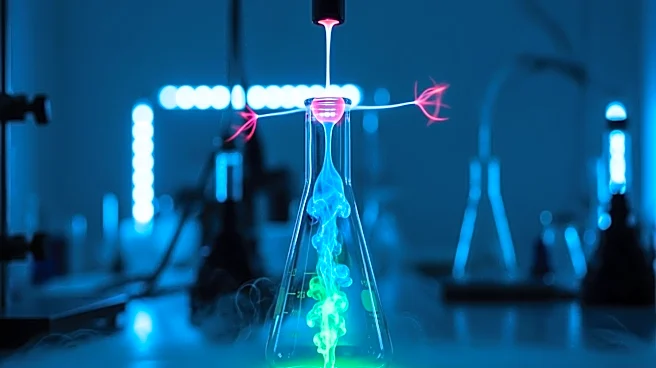
Researchers at Northwestern University have developed a new method to convert methane into methanol using plasma technology. This process involves using high-voltage electricity to create mini 'lightning bolts' in glass tubes submerged in water, which
breaks down methane into methanol in a single step. The method bypasses the need for extreme heat and high pressures required in traditional industrial processes, offering a cleaner and more energy-efficient alternative. The research, published in the Journal of the American Chemical Society, highlights the potential for this technology to reduce carbon emissions and provide a sustainable source of methanol.
Why It's Important?
This breakthrough in chemical engineering could have significant implications for the energy and chemical industries. Methanol is a versatile industrial chemical used in various applications, including as a cleaner-burning fuel. The ability to produce methanol more efficiently and sustainably could reduce reliance on fossil fuels and decrease carbon emissions. Additionally, the technology could enable smaller, distributed production facilities, making it feasible to convert methane emissions from remote or stranded resources into valuable products. This innovation aligns with global efforts to transition to cleaner energy sources and reduce the environmental impact of industrial processes.
What's Next?
The research team plans to optimize the plasma-based system further and explore methods to efficiently recover and purify methanol. If successful, this technology could be scaled up for commercial use, potentially transforming how methane is utilized in the energy sector. The development of this method may also spur further research into plasma applications in other chemical processes, contributing to advancements in sustainable chemistry and energy production.