
What's Happening?
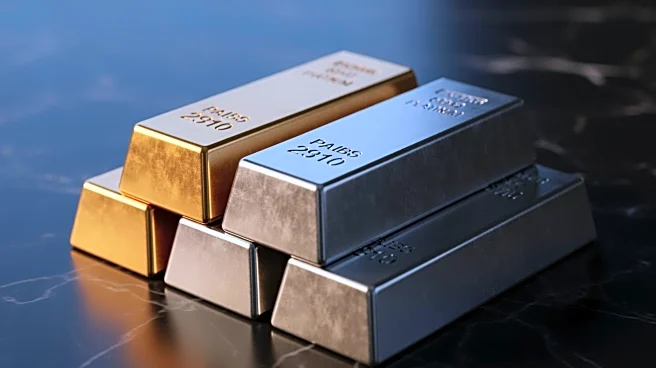
Gold prices have surged past $4,500 an ounce for the first time, with silver and platinum also reaching record highs. This increase is driven by safe-haven demand and expectations of further U.S. interest
rate cuts. Spot gold rose to $4,525.19 per ounce, while silver hit an all-time high of $72.70, and platinum peaked at $2,377.50. The rise in precious metals is supported by continued central bank buying, a declining U.S. dollar, and geopolitical tensions. Analysts suggest that the lack of bearish factors and strong market momentum are likely to sustain the upward trend in gold prices. The U.S. Federal Reserve's potential monetary policy easing is also contributing to the appeal of non-yielding assets like gold.
Why It's Important?
The surge in gold and other precious metals reflects broader economic uncertainties and investor behavior. As geopolitical tensions and economic policy shifts create volatility, investors are turning to safe-haven assets to protect their wealth. The rising prices of gold, silver, and platinum indicate a lack of confidence in traditional financial markets and currencies. This trend could have significant implications for the U.S. economy, influencing investment strategies and monetary policy. The increased demand for precious metals may also impact industries reliant on these materials, such as electronics and automotive manufacturing.
What's Next?
Market analysts predict that the upward trend in gold prices could continue, potentially reaching $5,000 per ounce by the end of 2026. The U.S. Federal Reserve's decisions on interest rates will be closely watched, as further cuts could enhance the attractiveness of gold and other non-yielding assets. Investors and financial institutions will likely adjust their portfolios to mitigate risks associated with economic uncertainties. Additionally, the ongoing demand for precious metals may lead to increased exploration and production efforts, impacting global supply chains and market dynamics.