





What's Happening?
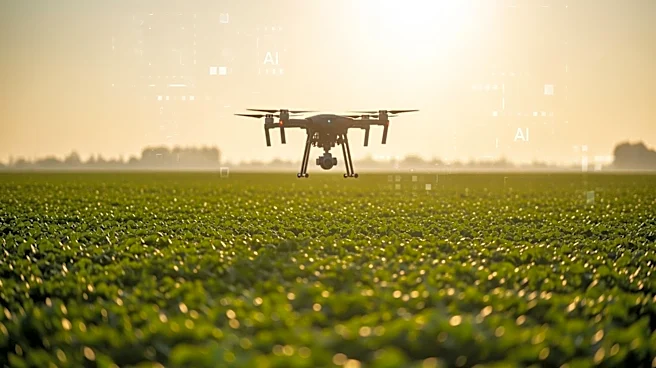
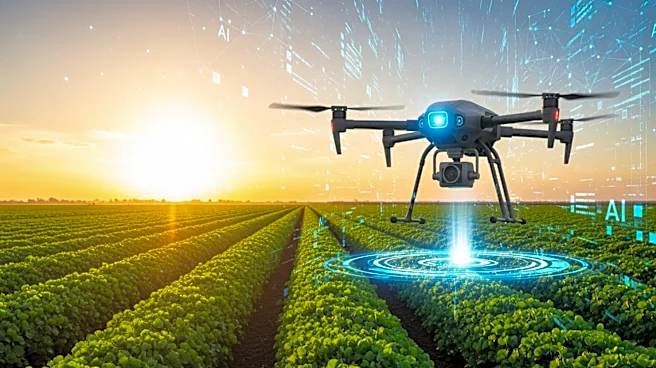
Artificial intelligence (AI) is increasingly being used to enhance decision-making in agriculture, as demonstrated by Nipuna Chamara, an assistant professor in biological systems engineering at the University of Nebraska–Lincoln. Chamara utilized AI tools
to win a category in the 2025 Testing Ag Performance Solutions (TAPS) competition, which involves managing corn and soybean crops over a growing season. Participants in the competition make critical decisions regarding irrigation, fertilization, pest control, and marketing, with performance evaluated based on yield, profitability, and input efficiency. In 2025, Chamara's team leveraged AI to access real-time data, including market trends and weather updates, which significantly improved their decision-making process. This led to securing first place in the highest corn yield category. The AI system suggested strategic actions such as locking in corn prices early due to market fluctuations, enhancing profitability.
Why It's Important?
The integration of AI in agriculture represents a significant advancement in farming practices, offering the potential to increase efficiency and profitability. By providing real-time data and insights, AI can help farmers make informed decisions that optimize resource use and improve crop yields. This technology is particularly beneficial in addressing challenges such as market volatility and environmental changes. The success of Chamara's team in the TAPS competition highlights the potential for AI to transform traditional farming methods, making them more sustainable and economically viable. As AI tools become more sophisticated, they could play a crucial role in ensuring food security and supporting the agricultural sector's growth.
What's Next?
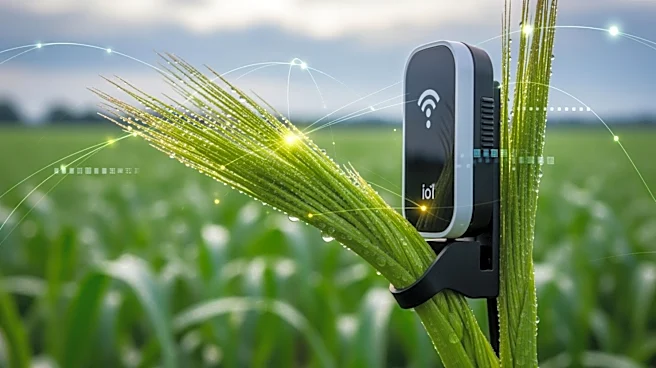
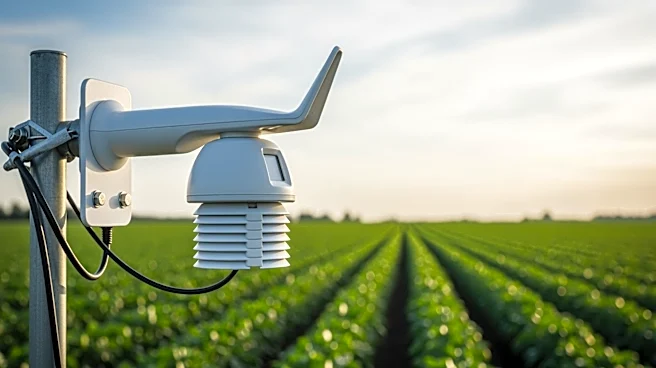
Future developments in AI for agriculture may focus on integrating farm sensors directly with AI systems to provide real-time updates and enhance decision-making. This could lead to more precise and timely interventions, further improving sustainability and productivity. As AI technology continues to evolve, it is likely to become an indispensable tool for farmers, enabling them to adapt to changing conditions and optimize their operations. However, it is essential for farmers to continue verifying AI recommendations with trusted sources to ensure accuracy and reliability.
Beyond the Headlines
The use of AI in agriculture raises important considerations regarding data accuracy and the need for robust digital records. While AI can significantly enhance decision-making, it relies on the quality of the data it processes. Therefore, ensuring the integrity and reliability of data inputs is crucial for maximizing the benefits of AI. Additionally, the adoption of AI in agriculture may require farmers to develop new skills and knowledge to effectively utilize these tools, highlighting the need for ongoing education and training in the sector.