






What's Happening?
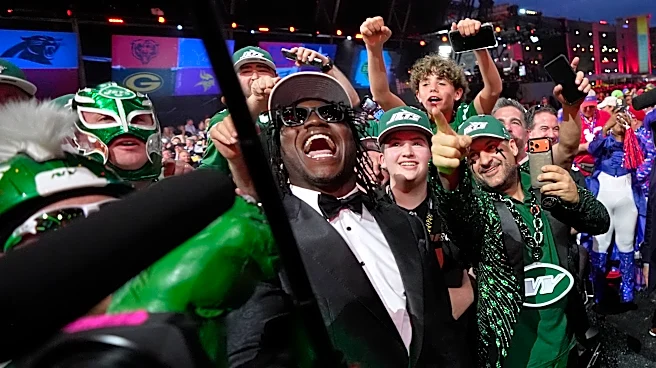
The New York Jets, during the second round of the NFL draft, initially aimed to select linebacker Jacob Rodriguez from Texas Tech with their 44th pick. However, the Miami Dolphins selected Rodriguez at the 43rd position, prompting the Jets to adjust their strategy.
They traded their 44th pick to the Detroit Lions, moving back to the 50th position and acquiring an additional fourth-round pick in the process. With the 50th pick, the Jets selected D'Angelo Ponds, a cornerback from Indiana. Ponds was a standout player on Indiana's national championship-winning team, known for his aggressive and scrappy playing style. This strategic move also reunited Ponds with his Indiana teammate, wide receiver Omar Cooper Jr., whom the Jets had drafted earlier.
Why It's Important?
This strategic pivot by the Jets highlights the dynamic nature of the NFL draft, where teams must be prepared to adapt quickly to changing circumstances. By acquiring D'Angelo Ponds, the Jets not only filled a defensive need but also gained additional draft capital, which could be crucial for future trades or selections. The decision to draft Ponds, a player with a proven track record in a championship team, could strengthen the Jets' defense significantly. This move also underscores the importance of flexibility and foresight in team management, as the Jets managed to turn a potential setback into an opportunity for growth.
What's Next?
The Jets will likely focus on integrating Ponds and Cooper Jr. into their team dynamics, leveraging their existing chemistry from Indiana. The additional fourth-round pick acquired in the trade could be used to address other team needs or as a bargaining chip in future trades. The success of this draft strategy will ultimately depend on Ponds' performance in the upcoming season and how well he adapts to the NFL level. The Jets' management will be closely monitoring these developments to assess the long-term impact of their draft decisions.