

What's Happening?
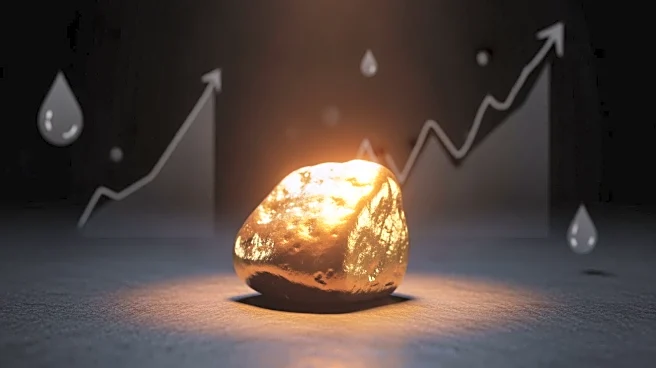
Gold prices have decreased as investors anticipate a more hawkish policy stance from the U.S. Federal Reserve, driven by concerns over inflation due to high oil prices. Spot gold fell by 0.6% to $4,976.12 per ounce, while U.S. gold futures for April delivery
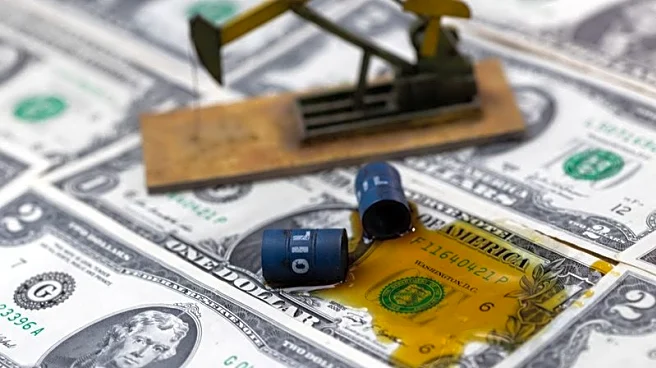
also dropped by 0.6% to $4,979.20. The ongoing conflict in the Middle East, particularly Iran's missile attack on Tel Aviv, has contributed to elevated oil prices, which remain above $100 per barrel. This situation has heightened inflationary pressures by increasing transport costs. Despite gold's traditional role as a hedge against inflation, high interest rates have reduced its appeal by raising the cost of holding bullion and increasing returns on yield-bearing assets. The Federal Reserve is expected to maintain steady rates for a second consecutive meeting, with only one rate cut anticipated in September 2026 and another in late 2027.
Why It's Important?
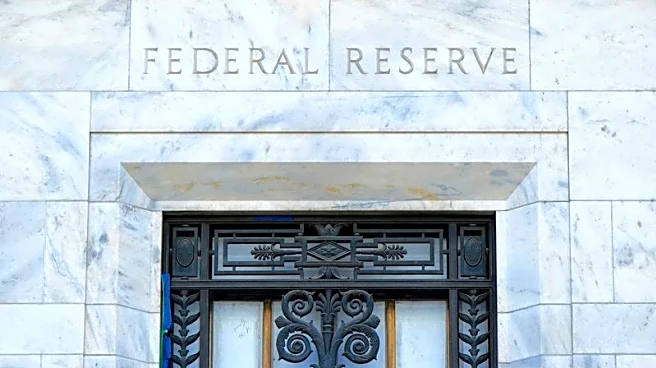
The current economic environment, characterized by high oil prices and geopolitical tensions, is influencing the Federal Reserve's monetary policy decisions. The anticipation of a hawkish stance by the Fed suggests that interest rates may remain elevated for an extended period, impacting the attractiveness of non-yielding assets like gold. This scenario poses challenges for investors seeking safe-haven assets amid inflationary pressures. The situation also underscores the interconnectedness of global events, such as the Middle East conflict, with domestic economic policies and market dynamics. The Fed's policy decisions will have significant implications for financial markets, influencing investment strategies and economic stability.
What's Next?
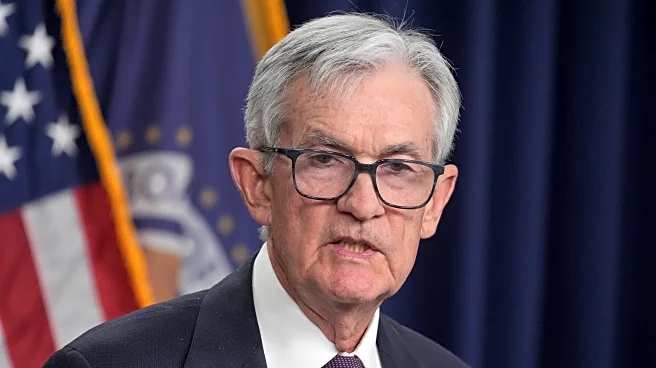
Investors are closely monitoring the Federal Reserve's upcoming policy announcement and remarks from Fed Chair Jerome Powell to gauge the central bank's outlook for the remainder of 2026. The market is also watching for potential developments in the Middle East conflict, which could further impact oil prices and inflationary pressures. The Fed's decisions will be pivotal in shaping market expectations and investment strategies, particularly in the precious metals sector. Stakeholders, including financial analysts and investors, will need to adapt to the evolving economic landscape and assess the implications of prolonged high interest rates on their portfolios.