





What's Happening?
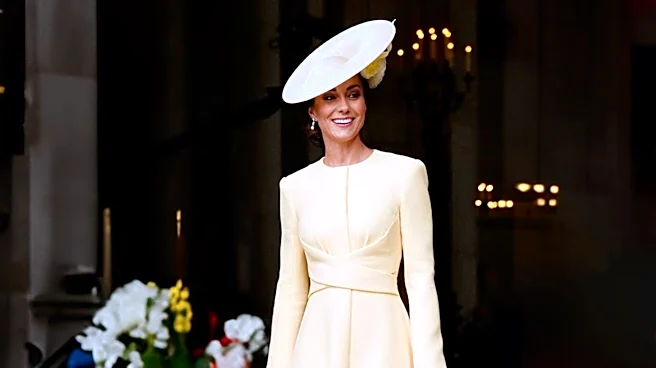
Queen Elizabeth II's fashion legacy, characterized by timeless elegance, was significantly shaped by four British designers: Sir Norman Hartnell, Sir Hardy Amies, Sir Edward Rayne, and milliner Kate Day. These designers played crucial roles in crafting
the Queen's public persona through meticulously curated ensembles that became synonymous with British royal fashion. From her early public appearances in the 1930s to her reign as monarch, Elizabeth's wardrobe choices were closely followed and documented, highlighting her evolution from a budding trendsetter to a global icon. The designers' contributions not only defined the Queen's style but also elevated British fashion on the international stage.
Why It's Important?
The fashion choices of Queen Elizabeth II have had a lasting impact on royal fashion and British design. By championing British designers, the Queen helped to promote and sustain the country's fashion industry, setting a standard for royal elegance that continues to influence modern fashion. The designers' work with the Queen also underscored the importance of fashion as a tool for diplomacy and cultural expression, as her wardrobe often reflected her royal duties and engagements. This legacy highlights the intersection of fashion, culture, and identity, demonstrating how clothing can convey continuity and tradition while adapting to contemporary trends.
Beyond the Headlines
The Queen's fashion legacy extends beyond aesthetics, reflecting broader cultural and historical narratives. Her deliberate choices in attire served as a bridge between tradition and modernity, reinforcing her role as a symbol of stability and continuity. The designers' work with the Queen also illustrates the power of fashion to shape public perception and national identity, as her style became a representation of British craftsmanship and elegance. This enduring influence continues to inspire designers and fashion enthusiasts, underscoring the cultural significance of royal fashion in shaping societal norms and values.