


What's Happening?
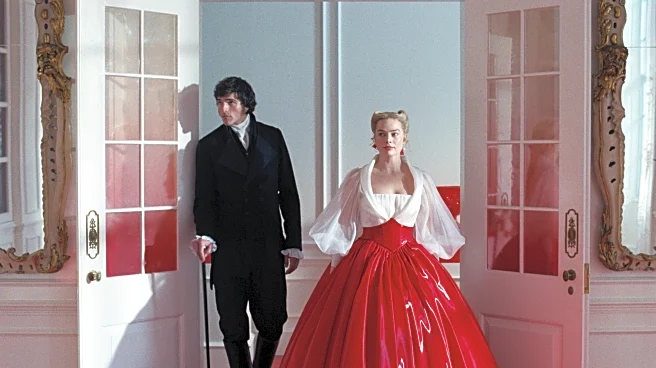
Emerald Fennell's adaptation of 'Wuthering Heights' has become a focal point of debate due to its casting choices and stylistic liberties. The film, set to release on Valentine's Day weekend, features Jacob Elordi and Margot Robbie in the lead roles of Heathcliff and Cathy, respectively. Critics and fans have expressed concerns over the casting of Elordi, a white actor, in a role traditionally seen as racially ambiguous, which some argue diminishes the character's outsider status central to the original narrative. Fennell's adaptation is noted for its opulent design and modernized elements, including provocative costumes and settings that diverge from the book's Georgian era. The film has been described as a 'campy fever dream' that prioritizes
visual allure over strict adherence to the source material.
Why It's Important?
The controversy surrounding Fennell's 'Wuthering Heights' highlights ongoing discussions about representation and fidelity in adaptations of classic literature. The decision to cast a white actor in a role that could have explored racial themes reflects broader industry challenges in addressing diversity and inclusion. Additionally, the film's stylistic choices raise questions about the balance between creative reinterpretation and respect for original works. This adaptation could influence future projects by setting a precedent for how classic stories are modernized, potentially impacting audience expectations and industry standards for literary adaptations.
What's Next?
As the film approaches its release, it is likely to continue generating discussion among critics and audiences. The reception of 'Wuthering Heights' may influence how studios approach casting and adaptation decisions in the future, particularly regarding the portrayal of complex characters with racial and cultural dimensions. The film's performance at the box office and its critical reception will be closely watched as indicators of public sentiment towards such creative liberties. Additionally, the film may prompt renewed interest in Emily Brontë's original novel, potentially leading to further adaptations that explore its themes from different perspectives.
Beyond the Headlines
The adaptation of 'Wuthering Heights' by Emerald Fennell also touches on the cultural and ethical dimensions of reimagining classic literature. By altering key aspects of the story, the film challenges traditional interpretations and invites viewers to reconsider the themes of love, obsession, and social status. This approach may encourage audiences to engage with the material in new ways, sparking discussions about the relevance of classic works in contemporary society. Furthermore, the film's emphasis on visual spectacle over narrative fidelity could reflect broader trends in the entertainment industry, where aesthetic appeal often takes precedence over storytelling depth.