





What's Happening?
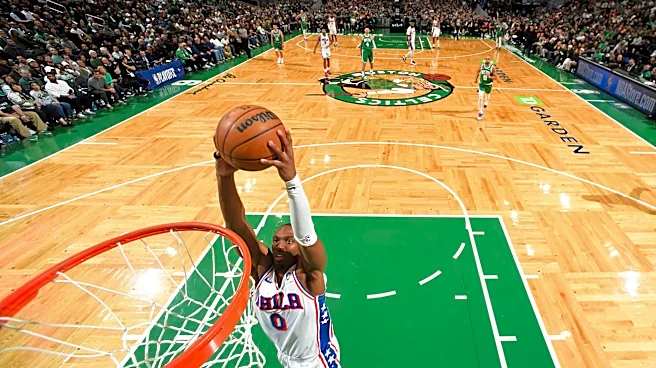
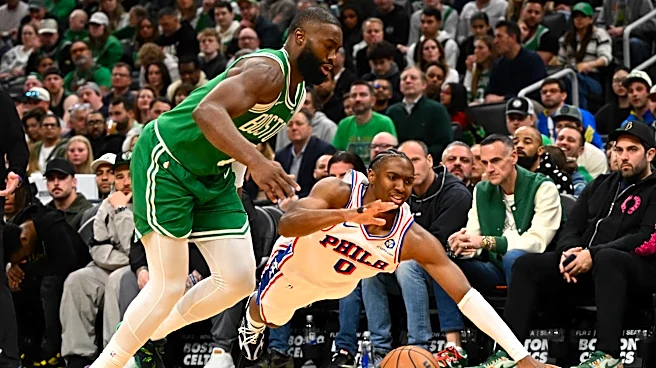
The Philadelphia 76ers achieved a surprising victory over the Boston Celtics in Game 2 of the NBA playoffs, largely due to shooting variance. The Sixers shot 48.7% from three-point range, a significant improvement from their 17.4% in Game 1, while the Celtics'
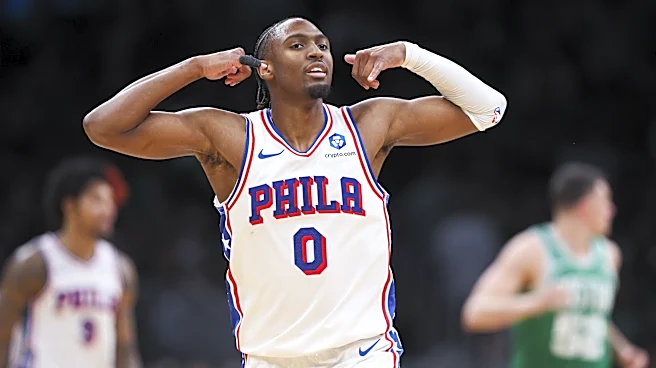
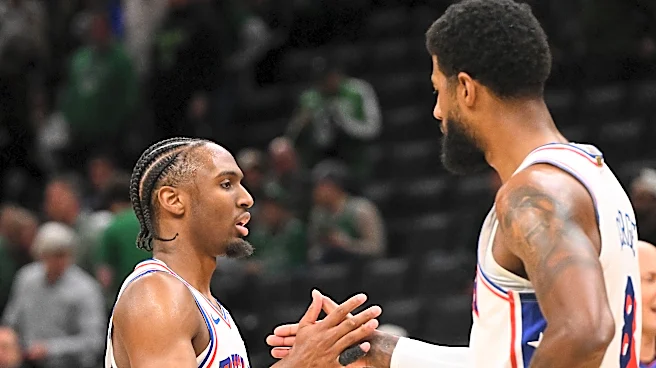
shooting dropped to 26%. The Sixers employed a tactical strategy, focusing on above-the-break three-point attempts, particularly from Tyrese Maxey and VJ Edgecombe. This approach exploited Boston's defensive drop coverage, allowing guards to take open shots from the top of the key.
Why It's Important?
The Sixers' victory demonstrates the impact of shooting variance in basketball, where a team's success can hinge on their ability to capitalize on shooting opportunities. This win boosts the Sixers' morale and keeps their playoff hopes alive, challenging the perception of their season's outcome. The strategic shift highlights the importance of adaptability in sports, as teams must adjust their tactics to exploit opponents' weaknesses. The outcome may influence future games, as both teams reassess their strategies to counter shooting variance.
What's Next?
The Sixers will likely continue to focus on maximizing shooting opportunities in upcoming games, aiming to maintain their momentum. The Celtics may adjust their defensive strategy to counter the Sixers' approach, potentially leading to a more competitive series. Fans and analysts will closely watch the teams' tactical decisions, as the series progresses and the stakes increase. The outcome of this series could have implications for team dynamics and coaching strategies in the NBA.