


What's Happening?
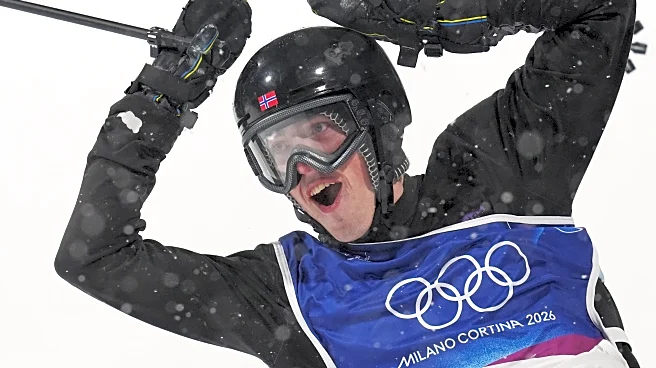
United States freestyle skier Rell Harwood has made headlines by competing in the 2026 Winter Olympics despite suffering from a torn ACL. Harwood, who sustained the injury in December 2025, participated in the big air qualifying event. Although she did not secure a place in the 12-person final, Harwood expressed pride in her ability to perform under such challenging circumstances. Her decision to compete mirrors that of fellow Team USA athlete Lindsey Vonn, who also competed with a torn ACL in a previous Olympics. Harwood's determination to participate despite her injury highlights her resilience and dedication to the sport.
Why It's Important?
Harwood's participation in the Olympics despite a significant injury underscores the intense pressure and commitment athletes
face in competitive sports. This event highlights the physical and mental challenges athletes endure to achieve their goals. It also raises awareness about the risks involved in pushing physical limits, especially in high-stakes environments like the Olympics. Harwood's story may inspire other athletes facing similar challenges, demonstrating that perseverance can lead to personal achievement, even if it doesn't result in a medal. Additionally, it brings attention to the need for adequate support and resources for injured athletes.
What's Next?
While Harwood did not advance to the finals, her performance may influence future discussions on athlete safety and the management of injuries in competitive sports. Stakeholders, including sports organizations and medical professionals, might consider reviewing protocols to better support athletes dealing with injuries. Harwood's experience could also lead to increased advocacy for mental health resources, as athletes often face significant psychological stress when competing with injuries. The sports community may look to Harwood's story as a case study in balancing ambition with health considerations.
Beyond the Headlines
Harwood's decision to compete with a torn ACL also touches on broader cultural and ethical questions about the expectations placed on athletes, particularly women. Her comments about the limitations imposed by physical injuries reflect ongoing discussions about gender and sports, where female athletes often face unique challenges. This event may contribute to a larger conversation about how sports culture can evolve to better accommodate and support female athletes, ensuring they have the resources and opportunities to succeed without compromising their health.