

What's Happening?
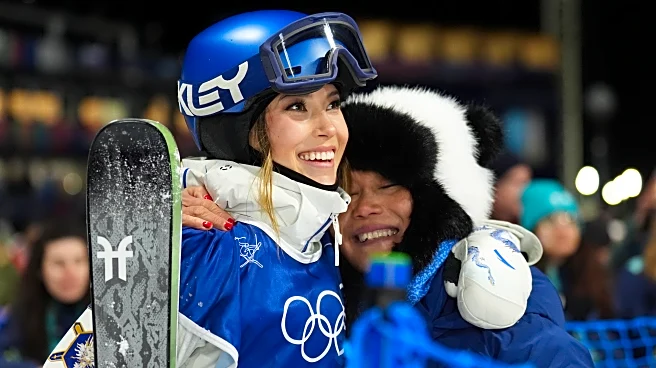
Eileen Gu, a prominent freestyle skier representing China, has expressed dissatisfaction with the scheduling of the Olympic practice sessions, which she claims are unfair. Gu, who is competing in the women's big air event at the Milano Cortina 2026 Winter Olympics, is facing a scheduling conflict that prevents her from practicing in the halfpipe due to her participation in the big air finals. The International Ski Federation (FIS), which oversees Olympic free skiing, has not accommodated her request for additional practice time. Gu, who won gold in the halfpipe at the Beijing Games, is the only athlete competing in all three disciplines: big air, slopestyle, and halfpipe. Despite the challenges, she has qualified for the big air finals, aiming
to defend her title. Gu's situation highlights the difficulties faced by athletes who compete in multiple events, as she is unable to train adequately for each discipline.
Why It's Important?
The scheduling conflict faced by Eileen Gu underscores the broader challenges within Olympic sports management, particularly for athletes competing in multiple disciplines. This situation raises questions about the fairness and flexibility of Olympic scheduling, potentially impacting athletes' performance and preparation. Gu's case is significant as it highlights the need for governing bodies like FIS to consider the unique demands on multi-discipline athletes. The outcome of this situation could influence future Olympic scheduling policies, ensuring more equitable conditions for athletes. Additionally, Gu's high-profile status and commercial success amplify the visibility of this issue, potentially prompting discussions on athlete welfare and support in competitive sports.
What's Next?
As Eileen Gu prepares for the big air finals, the focus will be on her performance and whether the scheduling conflict affects her results. The FIS may face increased scrutiny and pressure to address such scheduling issues in future events. Stakeholders, including athletes, coaches, and sports organizations, might advocate for more flexible and accommodating practice schedules. The outcome of Gu's participation could also influence her future endorsements and commercial opportunities, given her status as one of the highest-earning female athletes. Observers will be keen to see if Gu's experience prompts changes in how multi-discipline athletes are supported at the Olympics.