



What's Happening?
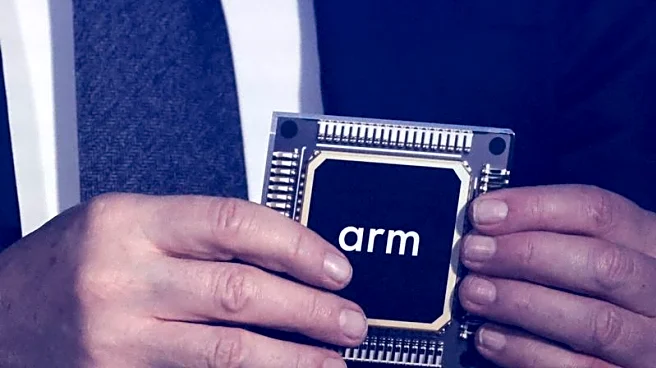
Arm has announced the launch of its first-ever CPU, the Arm AGI CPU, which is set to be integrated into Meta's AI data centers later this year. This marks a significant shift for Arm, traditionally known for licensing its chip designs rather than producing
them. The new CPU is designed for AI inference tasks, supporting the processing needs of AI tools that require high efficiency and performance. Meta, which has faced challenges in developing its own AI chips, is the lead partner and co-developer of this project. The CPU is built on the Neoverse platform, promising enhanced performance and energy efficiency compared to traditional x86 CPUs.
Why It's Important?
The introduction of Arm's CPU into Meta's data centers signifies a strategic move in the competitive AI chip market, where companies like Nvidia, AMD, and others are vying for dominance. This development could enhance Meta's AI capabilities, allowing for more efficient processing of AI tasks and potentially reducing operational costs. For Arm, this represents a diversification of its business model and an entry into the high-stakes AI hardware market. The collaboration also highlights the growing trend of tech giants seeking specialized hardware solutions to meet the demands of advanced AI applications.
What's Next?
As Arm's CPU is deployed in Meta's data centers, further developments in AI processing capabilities are anticipated. Other tech companies may follow suit, seeking to integrate similar technologies to enhance their AI infrastructure. The success of this collaboration could lead to more partnerships between chip manufacturers and tech companies, driving innovation in AI hardware. Additionally, the performance and efficiency of Arm's CPU will be closely monitored, potentially influencing future design and development strategies in the AI chip industry.
Beyond the Headlines
This development underscores the increasing importance of custom hardware solutions in the AI industry. As AI applications become more complex, the demand for specialized chips that can handle specific tasks efficiently is likely to grow. This trend could lead to a shift in how tech companies approach hardware development, prioritizing partnerships and co-development projects to achieve competitive advantages.