

What's Happening?
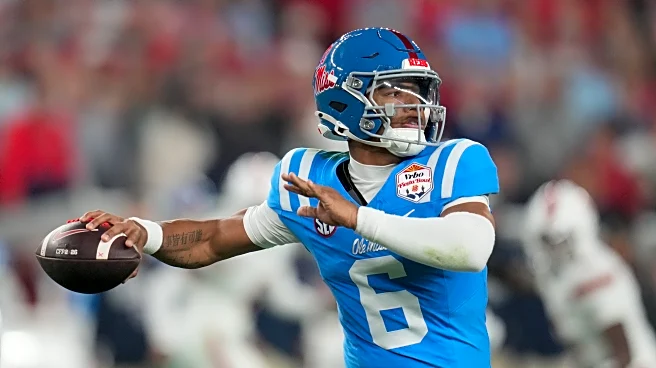
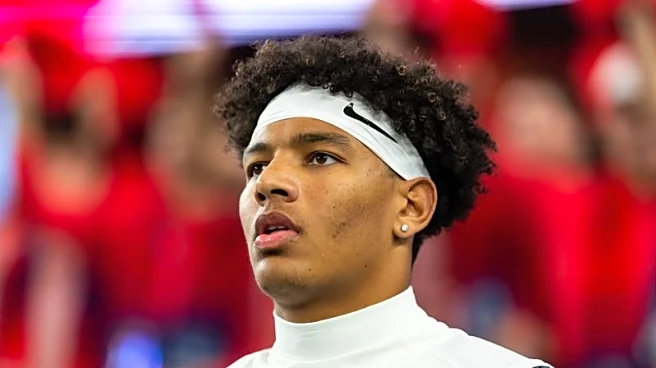
Trinidad Chambliss, the quarterback for Ole Miss, has become a standout figure in the College Football Playoff following a remarkable performance in the Sugar Bowl. Originally starting his career at Division II Ferris State, Chambliss transferred to Ole Miss as a backup. An injury to the starting quarterback, Austin Simmons, provided Chambliss the opportunity to lead the team. He has since delivered one of the most impressive seasons in Ole Miss history, throwing for 3,660 yards and rushing for 520 yards, with a total of 29 touchdowns. His performance was pivotal in Ole Miss's upset victory over No. 3 Georgia, where he passed for 362 yards and two touchdowns. Chambliss's journey from a Division II backup to a key player in the national semifinals
is considered one of the most improbable stories in college football.
Why It's Important?
Chambliss's rise is significant as it highlights the potential for players from smaller programs to make a substantial impact at higher levels of competition. His success underscores the importance of scouting and development in college sports, where talent can emerge from unexpected places. For Ole Miss, Chambliss's performance has been crucial in their pursuit of a national championship, enhancing the team's profile and potentially attracting more talent and resources. His story also serves as an inspiration to athletes who may not start their careers at top-tier programs, demonstrating that perseverance and opportunity can lead to success.
What's Next?
Chambliss and Ole Miss are currently awaiting a decision from the NCAA regarding a medical redshirt for the 2022 season, which would allow him to play in 2026. The outcome of this waiver process will determine whether Chambliss can continue his college football career at Ole Miss. If granted, he will return with a significant contract contingent on his eligibility. The decision will impact not only Chambliss's future but also Ole Miss's strategic planning for upcoming seasons.
Beyond the Headlines
Chambliss's story also touches on broader themes of identity and cultural representation. Despite fans waving Trinidad and Tobago flags in his honor, Chambliss has no connection to the Caribbean nation. His name, derived from religious and familial influences, has become iconic in its own right. This aspect of his story highlights how athletes can become symbols beyond their on-field achievements, influencing cultural narratives and fan engagement.