



What's Happening?
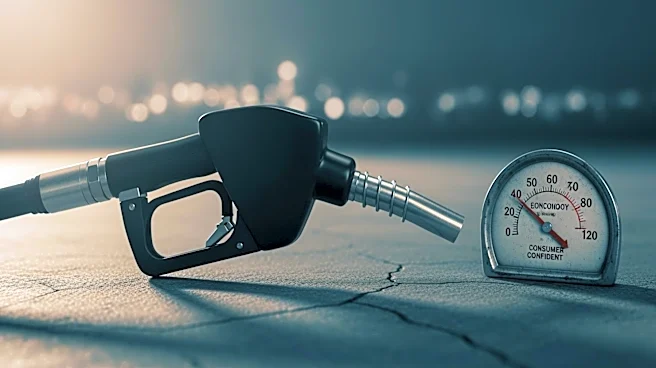
A report from the Federal Reserve Bank of New York highlights how rising gas prices are deepening economic disparities in the U.S. The study reveals that while all income groups are spending more on gas, lower-income households are reducing their real
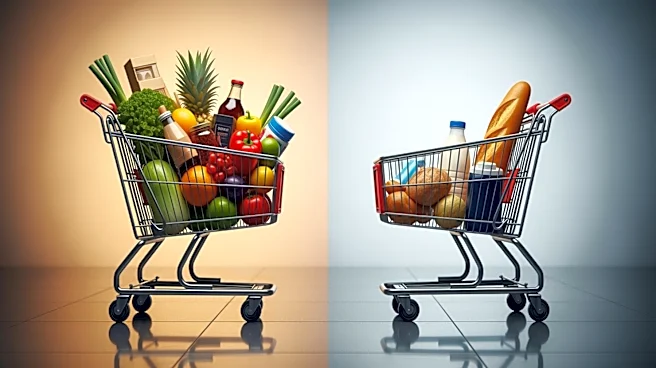
consumption significantly more than higher earners. This trend suggests that lower-income individuals are cutting back on driving or finding alternative transportation methods. The report indicates that high-income households have absorbed the price increases with minimal impact on their consumption levels. This situation is part of a broader 'K-shaped' economic recovery, where higher earners experience stable or improving financial conditions, while lower earners face increasing financial strain.
Why It's Important?
The findings underscore the uneven economic recovery in the U.S., where inflation and rising costs disproportionately affect lower-income households. This economic divide can lead to broader societal issues, including reduced mobility and access to opportunities for lower-income individuals. The persistence of a K-shaped recovery could exacerbate existing inequalities, affecting social cohesion and economic stability. Policymakers may need to consider targeted interventions to support those most affected by rising costs, such as subsidies or improved public transportation options.
What's Next?
As gas prices remain high, consumers, particularly those with lower incomes, may continue to adjust their spending habits. This could lead to increased demand for public transportation and carpooling options. Policymakers might explore measures to alleviate the financial burden on lower-income households, such as fuel subsidies or incentives for energy-efficient transportation. The ongoing economic divide may also influence future policy discussions around income inequality and economic support measures.