



What's Happening?
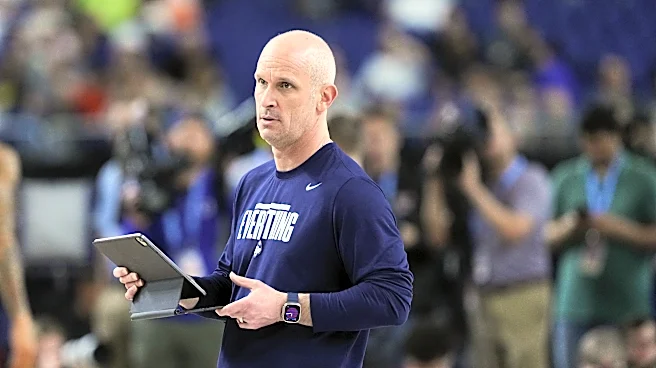
Dan Hurley, head coach of the University of Connecticut (UConn) men's basketball team, has secured substantial financial bonuses following the team's recent success in the NCAA Tournament. Hurley, who has been with UConn for six seasons, has led the team to
multiple NCAA Tournament appearances and two national championships. This season, UConn is competing for its third title under his leadership. Hurley recently turned down an offer from the Los Angeles Lakers, opting instead to sign a six-year, $50 million contract extension with UConn, making him one of the highest-paid coaches in college basketball. His contract includes a lucrative bonus structure, rewarding him for the team's progress in the tournament. Hurley has already earned $775,000 in bonuses this postseason, with the potential to earn an additional $500,000 if UConn wins the national championship, bringing his total potential tournament earnings to $1.75 million.
Why It's Important?
The financial incentives in Dan Hurley's contract highlight the significant monetary stakes involved in college sports, particularly in high-profile programs like UConn's basketball team. The bonuses reflect the value placed on success in the NCAA Tournament, which can enhance a university's reputation, attract top recruits, and increase revenue through merchandise sales and media rights. Hurley's decision to remain in college basketball, despite offers from professional teams, underscores the competitive nature of coaching contracts in the NCAA. This situation also illustrates the broader economic impact of college sports, where successful programs can significantly contribute to a university's financial health and national standing.
What's Next?
As UConn continues its pursuit of another national championship, the focus will be on the team's performance in the upcoming games. A victory would not only secure additional bonuses for Hurley and his staff but also further solidify UConn's status as a powerhouse in college basketball. The outcome of the tournament could influence future recruitment efforts and the university's strategic decisions regarding its athletic programs. Additionally, the financial success of the basketball program may prompt other universities to reevaluate their investment in sports, potentially leading to more competitive coaching contracts and enhanced facilities.