




What's Happening?
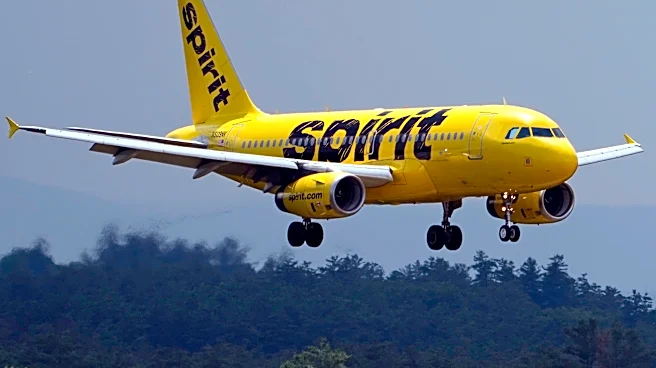
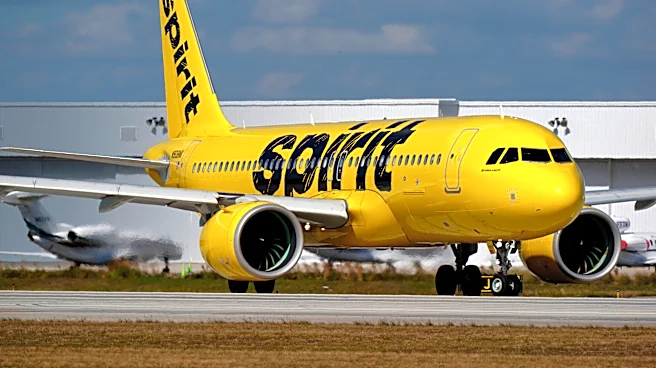
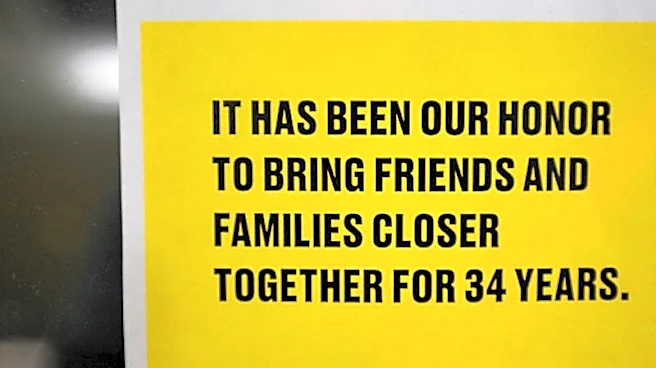
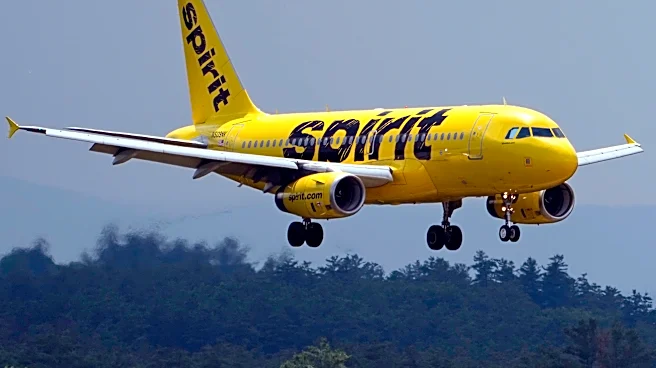
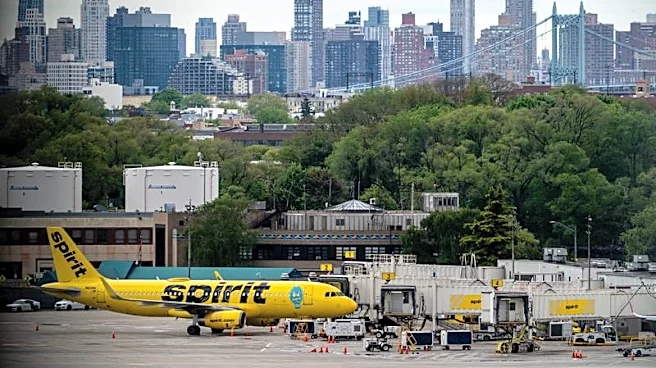
Spirit Airlines, known for its ultra-low-cost model, has announced it is ceasing operations immediately after 34 years in business. The airline, which employed approximately 17,000 people, has been struggling financially, exacerbated by rising jet fuel
prices due to the Iran war and the aftermath of the COVID-19 pandemic. Despite discussions of a potential government bailout by the Trump administration, no agreement was reached. As a result, all Spirit flights have been canceled, and the company has advised customers to seek refunds through their credit card companies or travel insurance policies. Transportation Secretary Sean Duffy mentioned that other airlines would offer special prices to affected travelers and assist Spirit employees in returning to their home cities.
Why It's Important?
The shutdown of Spirit Airlines is significant as it affects thousands of employees and could lead to increased airfares due to reduced competition in the airline industry. Spirit's closure removes a major player in the budget travel sector, potentially leading to higher prices for consumers, especially in regions where Spirit had a strong presence, such as Las Vegas and Florida. The airline's financial struggles highlight the broader challenges faced by the aviation industry, including rising operational costs and the impact of global events on fuel prices. The loss of Spirit Airlines could also lead to job losses and economic repercussions in communities where the airline was a major employer.
What's Next?
In the wake of Spirit Airlines' closure, affected travelers will need to seek alternative travel arrangements, potentially at higher costs. The airline industry may see a reshuffling as other carriers attempt to fill the void left by Spirit, possibly leading to changes in route availability and pricing structures. The situation may prompt discussions on the need for regulatory changes or support mechanisms for struggling airlines to prevent similar occurrences in the future. Additionally, labor unions and consumer advocacy groups may push for measures to protect jobs and maintain competitive pricing in the airline industry.