


What's Happening?
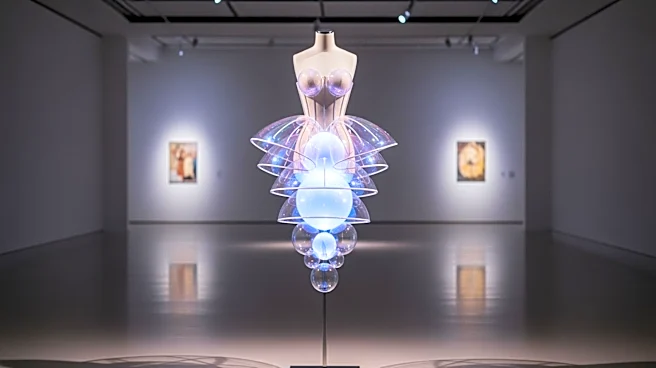
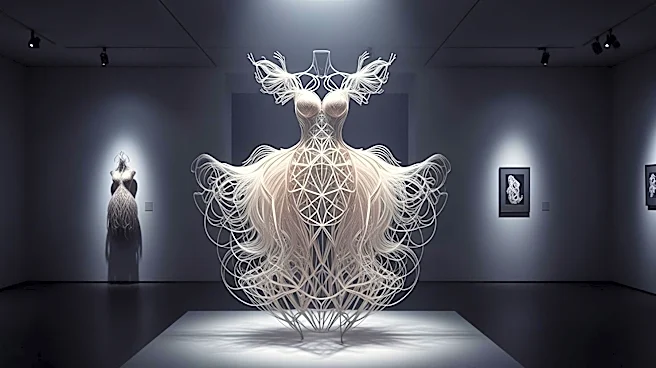
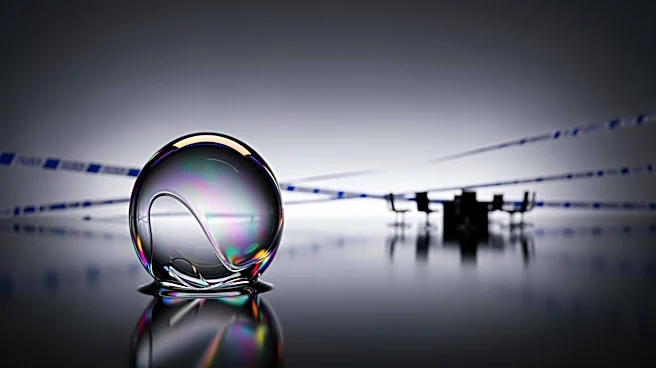
At the recent Met Gala, designer Iris van Herpen, alongside artist duo A.A. Murakami, unveiled the 'Airo Dress', a groundbreaking creation worn by athlete Eileen Gu. The dress, composed of 15,000 iridescent glass bubbles, was a highlight of the event,
which raised $42 million for the Costume Institute. The bubbles were meticulously hand-moulded and attached to the bodice using UV light, a process that took 2,550 hours over 15 weeks. The dress also featured a unique system where fresh bubbles emerged from beneath the skirt, powered by microprocessors that silently pressurize and release gas. This innovative design aligns with the gala's theme, 'Fashion is Art', emphasizing the body as a dynamic field of matter and energy.
Why It's Important?
The 'Airo Dress' represents a significant intersection of fashion, technology, and art, highlighting the potential for experimental technology in haute couture. This creation not only captivated the audience but also set a precedent for future fashion innovations. The successful integration of computational design and ephemeral materials in wearable art could inspire designers to explore new creative avenues, potentially transforming the fashion industry. The public's positive reception of such avant-garde designs suggests a growing openness to innovative fashion, which could drive further investment and interest in similar projects.
What's Next?
The success of the 'Airo Dress' at the Met Gala may encourage more designers to incorporate technology into their creations, potentially leading to a new era of fashion where art and science converge. As the fashion industry continues to evolve, there may be increased collaborations between designers and technologists, fostering a culture of innovation. This could also influence consumer expectations, with a growing demand for unique, technologically advanced garments. The industry might see a shift towards more sustainable and experimental designs, as seen in van Herpen's previous work with living algae.
Beyond the Headlines
The 'Airo Dress' not only challenges traditional fashion norms but also raises questions about the future of wearable technology. It blurs the lines between fashion and art, suggesting that clothing can be more than just functional or aesthetic—it can be a medium for artistic expression and technological advancement. This development could lead to broader discussions about the role of technology in everyday life and its potential to enhance human experiences. As designers continue to push boundaries, the fashion industry may increasingly become a platform for exploring complex themes such as identity, sustainability, and the relationship between humans and technology.