






What's Happening?
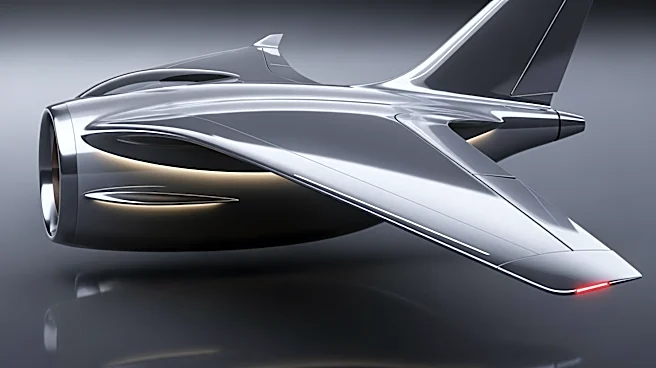
Boeing's exploration of blended wing body (BWB) technology, a design that integrates the aircraft's wings and fuselage into a single structure, aims to reduce noise, fuel consumption, and airfares. Despite its potential advantages, such as improved lift
and reduced drag, the technology has not been widely adopted. Historical attempts, including Boeing's X-48 and Airbus's MAVERIC, have demonstrated the concept's feasibility. However, challenges such as landing gear placement, evacuation requirements, and airworthiness certification have hindered its broader implementation. The BWB design, which dates back to early 20th-century concepts, continues to be refined by companies like JetZero, which plans to fly a full-scale demonstrator by 2027.
Why It's Important?
The adoption of BWB technology could significantly impact the aviation industry by offering more efficient aircraft designs that align with global efforts to reduce carbon emissions. As airlines and manufacturers face increasing pressure to meet environmental targets, the BWB's potential to lower fuel consumption and noise pollution presents a compelling case for its development. However, the technology's success depends on overcoming technical and regulatory hurdles. If successful, it could lead to a shift in aircraft design standards, influencing future airliner production and potentially reducing operational costs for airlines.
What's Next?
JetZero's plans to test a full-scale BWB demonstrator in 2027 mark a critical step in the technology's development. The outcome of these tests will likely influence industry and regulatory perspectives on BWB adoption. Additionally, partnerships with major airlines and government agencies, such as the United States Air Force and NASA, could provide the necessary support and validation for the technology. As the aviation industry continues to prioritize sustainability, the BWB design may gain traction if it proves to deliver on its promises of efficiency and environmental benefits.
Beyond the Headlines
The BWB design challenges traditional aircraft configurations, potentially leading to a reevaluation of airport infrastructure and operational procedures. Its adoption could necessitate changes in runway design and passenger boarding processes. Moreover, the technology's reliance on advanced materials and flight control systems highlights the need for continued innovation in aerospace engineering. The BWB's success could also inspire further exploration of unconventional aircraft designs, pushing the boundaries of aerodynamics and structural engineering.