

What's Happening?
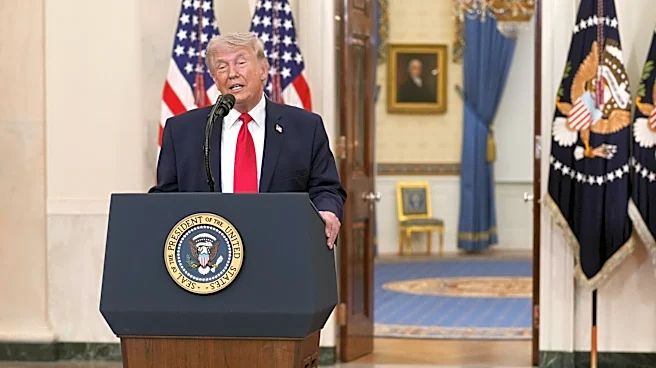
U.S. crude oil prices have reached an unprecedented premium, with the nearest delivery contract trading at the largest spread over the subsequent month in history. This development follows President Trump's announcement of continued military action against
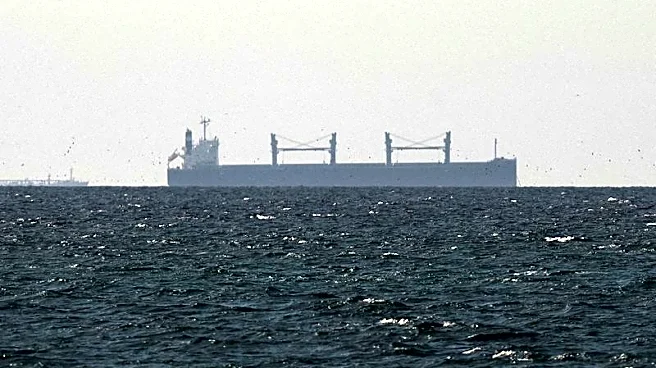
Iran. On Thursday, West Texas Intermediate (WTI) prices for May delivery surged over 11%, closing at $111.54 per barrel, which is more than $13 above the June price of $98.04 per barrel. This marks the largest spread between the front month and second month since records began in 1983. The increase in prices was influenced by President Trump's national address, which dashed hopes for a quick resolution to the conflict. Prior to the address, crude prices had fallen by 1.24% to $100.12 per barrel. The market's perception that the conflict might end soon was challenged, leading to a rise in prices during the speech. Additionally, the spot price for Brent crude oil soared to $141.36, the highest since the 2008 financial crisis, reflecting tight physical supply due to disruptions in the Strait of Hormuz.
Why It's Important?
The surge in U.S. crude oil prices has significant implications for the global energy market and the U.S. economy. The historic premium indicates heightened market volatility and uncertainty due to geopolitical tensions. The increase in oil prices can lead to higher costs for consumers and businesses, potentially impacting inflation and economic growth. Energy companies may benefit from higher prices, but industries reliant on oil, such as transportation and manufacturing, could face increased operational costs. The situation underscores the vulnerability of global oil supply chains to geopolitical events, highlighting the need for diversified energy sources and strategic reserves.
What's Next?
As the conflict between the U.S. and Iran continues, oil prices are likely to remain volatile. Market participants will closely monitor developments in the region, particularly any changes in military strategy or diplomatic efforts. The U.S. government may consider measures to stabilize the oil market, such as releasing strategic reserves or engaging in diplomatic negotiations. Energy companies and investors will need to adapt to the changing market dynamics, potentially exploring alternative energy sources or hedging strategies to mitigate risks. The ongoing situation may also prompt discussions on energy independence and the transition to renewable energy sources.