






What's Happening?
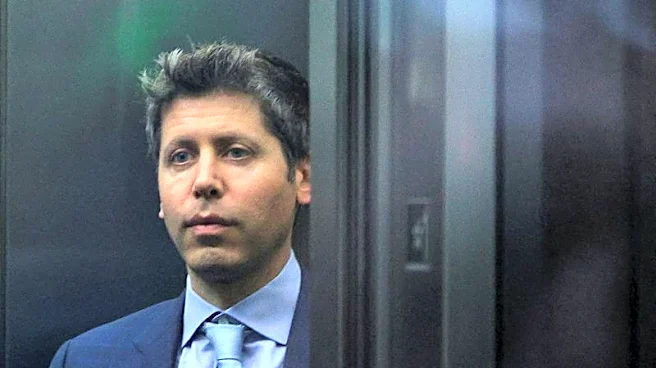
Sam Altman, CEO of OpenAI, has taken the stand in a federal civil trial initiated by Elon Musk. The trial, which began on May 12, involves Musk seeking $150 billion in damages to be paid to an OpenAI nonprofit. Musk's legal actions include demands for
the removal of Altman and Greg Brockman from leadership positions and the reversal of OpenAI's transition to a for-profit structure. The case has drawn significant attention due to the involvement of high-profile tech figures, including Microsoft CEO Satya Nadella and OpenAI president Greg Brockman. The trial underscores the ongoing disputes between Musk and other OpenAI founders, which have been marked by public allegations and legal challenges.
Why It's Important?
The trial is significant as it highlights the complex dynamics and governance issues within major AI firms. The outcome could have far-reaching implications for corporate governance in the tech industry, particularly concerning the balance of power between founders and their companies. The case also brings to light the challenges of managing high-stakes litigation in rapidly evolving sectors like AI, where market valuations can reach billions. The scrutiny on OpenAI, valued at approximately $852 billion, could influence investor confidence and regulatory approaches to AI governance and market structure.
What's Next?
As the trial progresses, the tech industry will be closely monitoring the potential impacts on OpenAI's operations and leadership. The case could set precedents for how disputes among tech founders are resolved, potentially affecting future mergers, acquisitions, and IPO activities. Stakeholders, including investors and regulators, may react by reassessing their strategies and policies regarding AI companies. The trial's outcome could also influence public and governmental perceptions of AI's role in society and the economy.