



What's Happening?
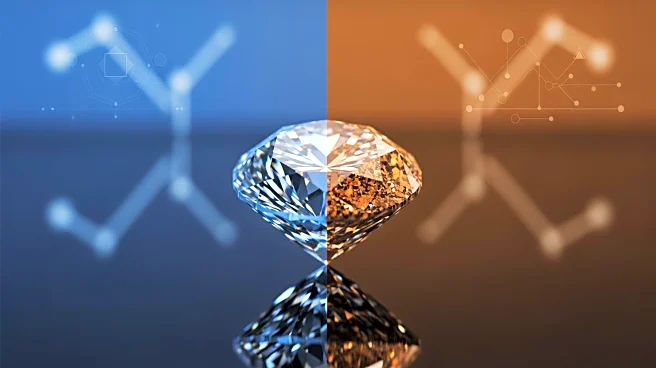
The global diamond industry is experiencing significant disruption due to the rise of lab-grown diamonds, which are reshaping traditional market dynamics. These synthetic diamonds, produced through Chemical Vapor Deposition (CVD) and High-Pressure High-Temperature
(HPHT) methods, offer a cost-effective alternative to natural diamonds. The production of lab-grown diamonds has expanded significantly, with annual output reaching 15-20 million carats, primarily from facilities in China, India, and the United States. This shift has led to a substantial decline in natural diamond prices, which have fallen by more than 40% from their peak. Major companies like De Beers are facing financial challenges, with daily losses reported at $1.5 million in 2025. The market share of lab-grown diamonds in the U.S. engagement ring market has reached 45-50%, reflecting changing consumer preferences, particularly among millennials and Generation Z.
Why It's Important?
The rise of lab-grown diamonds is reshaping the diamond industry, impacting traditional mining operations and altering consumer behavior. The economic advantage of synthetic diamonds, which are significantly cheaper than natural ones, is driving their adoption. This shift poses a threat to traditional diamond mining companies, which are experiencing financial strain due to declining prices and market share. The environmental benefits of lab-grown diamonds, such as lower water usage and reduced land disruption, are also appealing to environmentally conscious consumers. As synthetic diamonds gain acceptance, traditional diamond companies are forced to adapt by emphasizing the rarity and heritage of natural diamonds. This transformation highlights broader trends in consumer preferences towards value and ethical considerations, which could have long-term implications for the luxury goods market.
What's Next?
Traditional diamond companies are likely to continue adapting their strategies to compete with the growing popularity of lab-grown diamonds. This may include enhancing certification and provenance tracking systems to differentiate natural diamonds as premium luxury goods. Companies may also invest in marketing campaigns that emphasize the unique geological formation and scarcity of natural diamonds. Additionally, the industry could see further consolidation as companies seek to maintain margins and control over the supply chain. The continued development of synthetic diamond production technology is expected to improve efficiency and reduce costs, further pressuring natural diamond prices. As consumer preferences evolve, the market may see a clearer segmentation between premium natural diamonds and mass-market synthetic options.
Beyond the Headlines
The disruption caused by lab-grown diamonds extends beyond economic impacts, touching on ethical and environmental considerations. The reduced environmental footprint of synthetic diamonds, compared to natural mining operations, aligns with growing consumer demand for sustainable products. This shift also raises questions about the future of traditional diamond mining communities and the potential socio-economic impacts of declining demand for natural diamonds. As the industry evolves, regulatory frameworks may need to adapt to ensure transparency and consumer protection, particularly in distinguishing between synthetic and natural diamonds. The long-term viability of natural diamonds as a luxury investment may depend on the industry's ability to effectively communicate their unique value proposition in a changing market landscape.