




What's Happening?
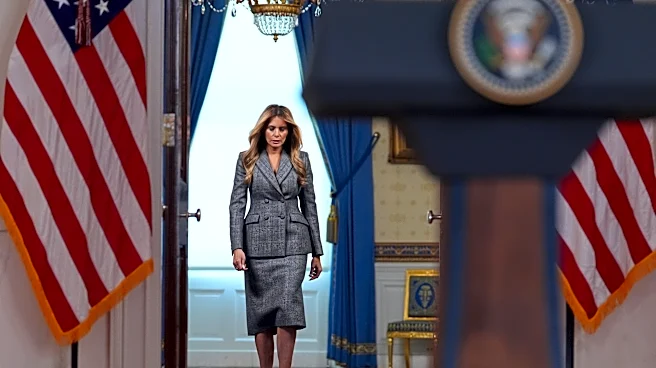
The latest episode of 'Saturday Night Live' opened with a sketch featuring Melania Trump, played by Chloe Fineman, addressing a fictional press event about Jeffrey Epstein. The sketch, aired on April 11, 2026, included James Austin Johnson as President
Trump, who humorously interacted with his wife over her unexpected speech. Melania's character humorously denied any involvement with Epstein and other unrelated figures, such as the Gilgo Beach serial killer and Diddy, in an attempt to deflect suspicion. The episode also featured other comedic interactions, including a call to Tiger Woods and a satirical take on U.S. Defense Secretary Pete Hegseth's stance on Iran. This episode marked a return to the show's traditional format of opening with a Trump-focused sketch after a brief departure the previous week.
Why It's Important?
The sketch underscores 'SNL's' ongoing role in political satire, particularly in its portrayal of the Trump family and administration. By addressing Melania Trump's fictional speech, the show continues to engage with current and past political narratives, reflecting public interest and discourse around these figures. The comedic portrayal of serious topics like Epstein's case and international relations with Iran highlights the show's influence in shaping public perception and commentary on political events. This episode also demonstrates 'SNL's' ability to blend humor with political critique, maintaining its relevance in the entertainment industry.
What's Next?
Following this episode, 'SNL' is scheduled to take a brief hiatus before returning in early May. The upcoming episodes will feature Olivia Rodrigo, Matt Damon, and Will Ferrell as hosts, with musical guests including Noah Kahan and Paul McCartney. These episodes will likely continue the show's tradition of blending entertainment with political satire, potentially addressing new developments in U.S. politics and society. The show's return in the fall for Season 52 will further provide opportunities to explore evolving political landscapes and cultural trends.