







What's Happening?
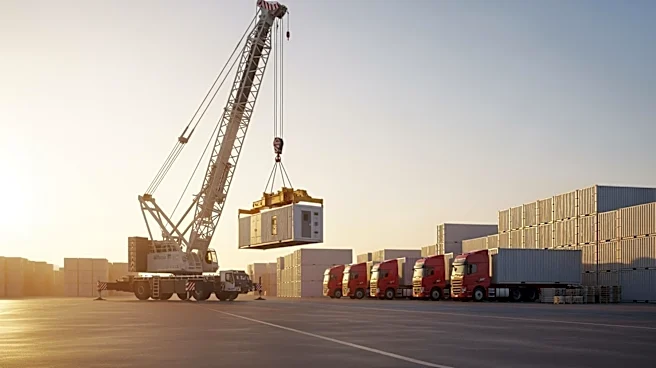
The construction of data centers is increasingly dependent on the precise coordination of logistics to ensure that specialized equipment arrives on schedule. This includes generators, switchgear, cooling systems, and sensitive IT hardware. The logistics process
is crucial as it involves managing global supply chains, staging equipment, and aligning deliveries with construction milestones. The sector is expected to see significant growth, with nearly 100 gigawatts of new data center capacity projected to come online globally between 2026 and 2030. This expansion is driven by the increasing demand for artificial intelligence applications, which are expected to account for a significant portion of data center workloads by 2030.
Why It's Important?
The importance of logistics in data center construction is underscored by the potential for delays and increased costs if equipment does not arrive on time or in the correct sequence. As the demand for data centers grows, particularly in North America, the ability to manage logistics effectively will be crucial for developers. The sector could see up to $3 trillion in infrastructure spending by 2030, with logistics playing a key role in ensuring that projects remain on schedule and within budget. This has implications for the broader economy, as efficient logistics can help prevent costly slowdowns and support the rapid deployment of new technologies.
What's Next?
As data center construction accelerates, logistics will become an even more integral part of the planning process. Developers are likely to focus on early coordination of logistics to secure production slots and manage supply chains effectively. This will involve working closely with logistics teams to plan equipment movements and align them with construction schedules. Additionally, as more projects are developed in industrial corridors and remote locations, logistics will play a critical role in ensuring that these facilities can be built efficiently and sustainably.