






What's Happening?
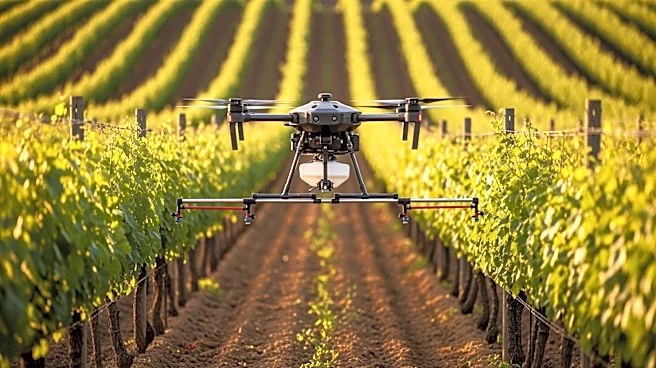
Yamaha Agriculture has introduced a new herbicide attachment for its Prospr autonomous hybrid vehicle platform, enhancing its capabilities in weed control for vineyards and orchards. Developed in collaboration with Croplands Equipment, the attachment integrates
seamlessly with Prospr, allowing for precise and automated herbicide application. This innovation is part of Yamaha's broader strategy to provide scalable automation solutions that improve sustainability and efficiency for specialty crop growers. The new attachment will be showcased at the upcoming Hort Connections 2026 in South Australia, highlighting its potential to address labor challenges and improve crop quality through advanced automation.
Why It's Important?
The introduction of the herbicide attachment represents a significant advancement in precision agriculture, offering growers a tool to enhance operational efficiency and sustainability. By automating weed control, the Prospr platform reduces the reliance on manual labor, which is often scarce and costly. This development aligns with the growing demand for sustainable farming practices that minimize chemical use and environmental impact. For the agricultural industry, such innovations are crucial in maintaining competitiveness and meeting the increasing global demand for food production. The ability to integrate multiple tools and attachments also positions Prospr as a versatile solution for diverse agricultural needs.
What's Next?
Yamaha Agriculture plans to continue expanding the capabilities of the Prospr platform, potentially introducing more attachments and features that cater to various agricultural tasks. The company is likely to focus on enhancing the platform's AI-powered analytics and connectivity features, further integrating data-driven decision-making into farm management. As the platform gains traction, it may influence broader adoption of autonomous technologies in agriculture, encouraging other companies to develop similar solutions. The success of the herbicide attachment could lead to increased collaboration with growers and technology partners, driving further innovation in the field.