






What's Happening?
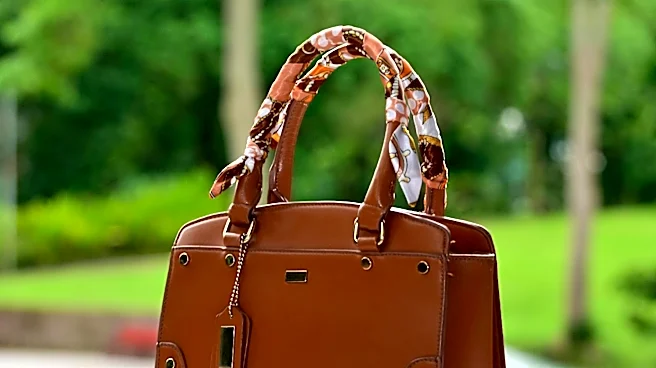
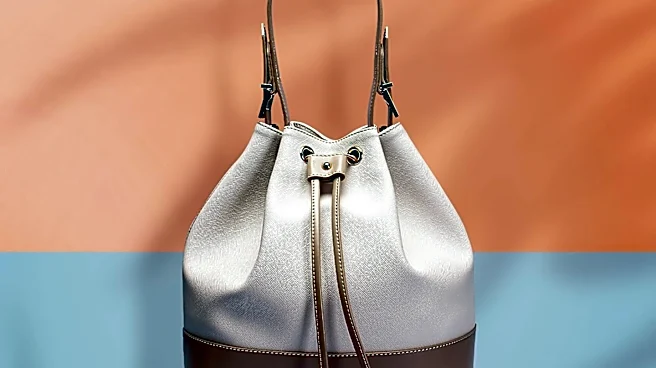
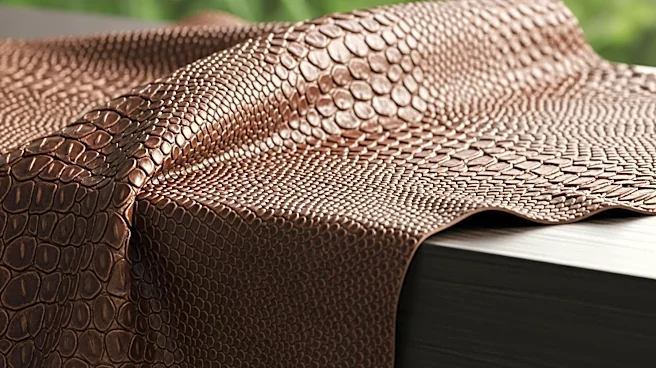
Biotech companies, including The Organoid Company, Lab-Grown Leather Ltd., and VML, have developed a unique handbag made from lab-grown leather derived from Tyrannosaurus Rex fossil fragments. This innovative material is created by extracting protein
fragments from dinosaur remains and inserting them into animal cells to produce collagen, which is then turned into leather. The process uses a 'scaffold-free' tissue engineering technology, allowing cells to form their own natural structure. This method contrasts with traditional leather production, which often involves chemical-intensive tanning processes. The handbag, designed by Polish tech wear label Enfin Levé, is currently a one-of-a-kind collector's piece, set to be displayed at Amsterdam's Art Zoo museum before being auctioned. The companies aim to introduce a more humane and sustainable alternative to traditional leather in the high-end market.
Why It's Important?
The development of T. Rex leather represents a significant advancement in sustainable fashion, offering a potential alternative to traditional leather that reduces environmental impact. Traditional leather production involves tanning processes that can pollute water sources, whereas the lab-grown leather does not require such methods. This innovation could lead to a shift in the fashion industry towards more sustainable practices, appealing to environmentally conscious consumers and potentially influencing other sectors to adopt similar technologies. The success of this product among elite and influencers could pave the way for broader acceptance and integration into mainstream fashion, promoting a more sustainable approach to material sourcing.
What's Next?
The T. Rex leather handbag will be auctioned after its display at the Art Zoo museum, with a starting price exceeding half a million dollars. The outcome of this auction could influence the future of lab-grown leather in the fashion industry. If successful, it may encourage further investment and development in synthetic biology for sustainable materials. The companies involved hope to see this innovation adopted more widely across fashion and accessories, potentially leading to new product lines and collaborations with other designers and brands. The broader acceptance of such materials could drive regulatory and industry changes towards more sustainable practices.
Beyond the Headlines
This development highlights the intersection of synthetic biology and fashion, showcasing how scientific advancements can lead to innovative solutions in unexpected fields. The use of prehistoric biology to create modern materials raises ethical and cultural questions about the manipulation of ancient DNA and its implications for biodiversity and conservation. Additionally, the high cost of the initial product suggests that while the technology is promising, it may take time before it becomes accessible to a wider audience. The success of this initiative could inspire further exploration into other applications of synthetic biology beyond fashion, potentially impacting various industries.