
What's Happening?
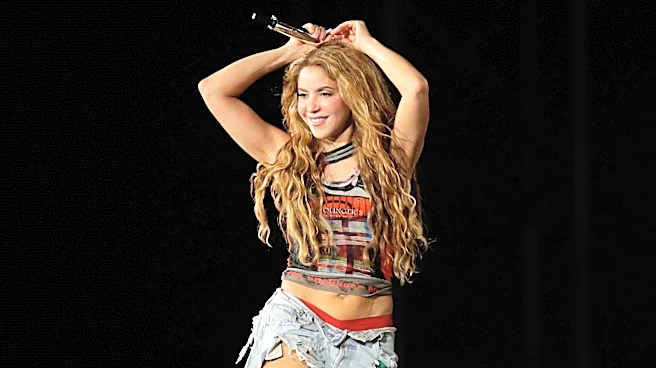
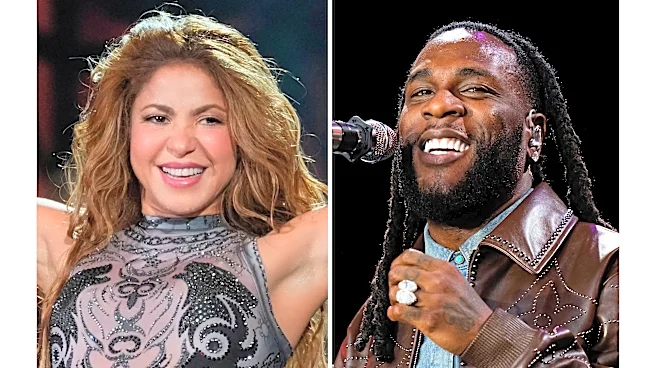
Shakira and Burna Boy have teamed up to release 'Dai Dai,' the official song for the 2026 World Cup. The track, which blends Afrobeats with Latin Pop, aims to capture the global spirit of the tournament.
It includes lyrics in multiple languages and references famous soccer players and participating countries. The song's royalties will support the FIFA Global Citizen Education Fund, which seeks to raise $100 million for children's education and soccer opportunities by the end of the tournament. Shakira, known for her previous World Cup hits, will also headline the first-ever halftime show at the World Cup final in New Jersey, alongside Madonna and BTS.
Why It's Important?
The collaboration between Shakira and Burna Boy highlights FIFA's strategy to appeal to diverse global audiences by incorporating popular music styles like Afrobeats and Latin Pop. This approach not only enhances the cultural significance of the World Cup but also aims to engage fans worldwide, potentially increasing viewership and participation. The initiative to support children's education through the song's royalties underscores FIFA's commitment to social responsibility, potentially influencing other organizations to adopt similar philanthropic efforts. The involvement of high-profile artists in the World Cup's musical offerings could set a precedent for future tournaments, emphasizing the role of music in global sports events.
What's Next?
As the World Cup approaches, the song 'Dai Dai' is expected to gain significant airplay and become a staple in broadcasts and stadiums. The halftime show featuring Shakira, Madonna, and BTS is anticipated to draw substantial attention, potentially boosting ticket sales and viewership. Additionally, FIFA's release of an official 2026 World Cup album featuring artists from host nations may further diversify the tournament's musical landscape. The success of these musical endeavors could influence future World Cup planning, encouraging the integration of more diverse cultural elements into the event.
Beyond the Headlines
The choice of artists and musical styles for the World Cup reflects broader cultural and demographic shifts, highlighting the increasing influence of Latin and African music on the global stage. This trend may encourage more cross-cultural collaborations in the music industry, fostering greater cultural exchange and understanding. Furthermore, the emphasis on educational initiatives through the FIFA Global Citizen Education Fund could inspire other sports organizations to incorporate social impact projects into their events, potentially leading to long-term positive changes in communities worldwide.