





What's Happening?
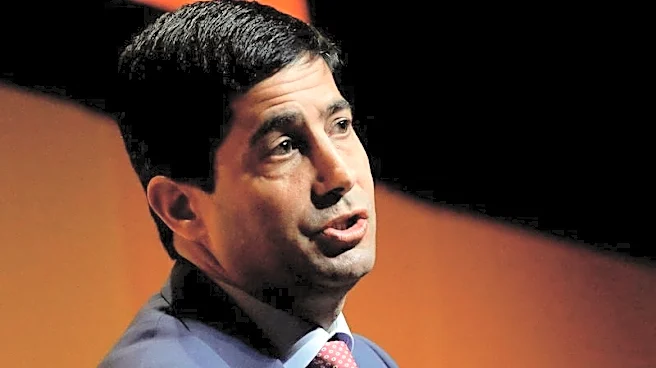
Kevin Warsh, nominated by President Trump for the position of Federal Reserve Chair, is drawing on the legacy of former Fed Chair Alan Greenspan to justify potential interest rate cuts. Warsh argues that, like Greenspan, he can rely on anecdotal evidence
to guide monetary policy, particularly in the context of technological advancements such as artificial intelligence. However, this interpretation of Greenspan's methods is contested. During his tenure, Greenspan was known for his deep analysis of economic data, despite its limitations, rather than relying solely on intuition or anecdotal evidence. Greenspan's approach during the 1990s, a period marked by technological transformation, involved a detailed examination of productivity data across industries, which allowed him to make informed decisions about interest rates. Warsh's stance suggests a departure from data-driven policy, emphasizing the potential of anecdotal insights in shaping economic decisions.
Why It's Important?
The approach to monetary policy taken by the Federal Reserve Chair has significant implications for the U.S. economy. Warsh's inclination to prioritize anecdotal evidence over comprehensive data analysis could lead to unpredictable economic outcomes. This method contrasts with the traditional data-dependent strategies that have historically guided the Federal Reserve's decisions. If Warsh's approach is implemented, it could affect inflation rates, employment, and overall economic stability. The reliance on anecdotal evidence may introduce greater uncertainty into monetary policy, potentially impacting financial markets and economic growth. Stakeholders, including businesses and consumers, could face increased volatility in interest rates, affecting borrowing costs and investment decisions.
What's Next?
If confirmed, Warsh's leadership at the Federal Reserve could usher in a new era of monetary policy that diverges from established practices. This shift may prompt reactions from various economic stakeholders, including policymakers, financial institutions, and international markets. The potential for lower interest rates could stimulate economic activity in the short term but also risks overheating the economy if not carefully managed. Observers will closely monitor Warsh's policy decisions and their impact on economic indicators such as inflation and employment. The Federal Reserve's approach under Warsh could also influence global economic trends, given the interconnected nature of international markets.