




What's Happening?
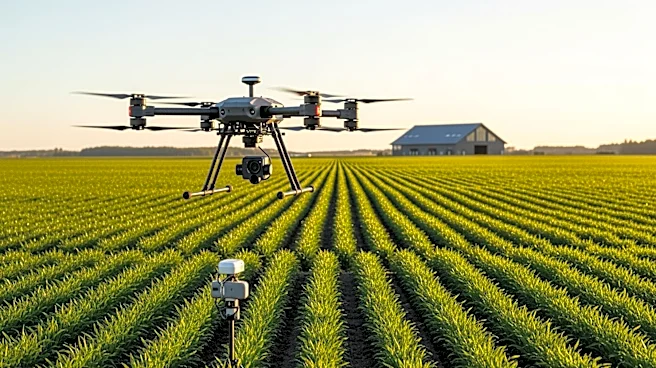
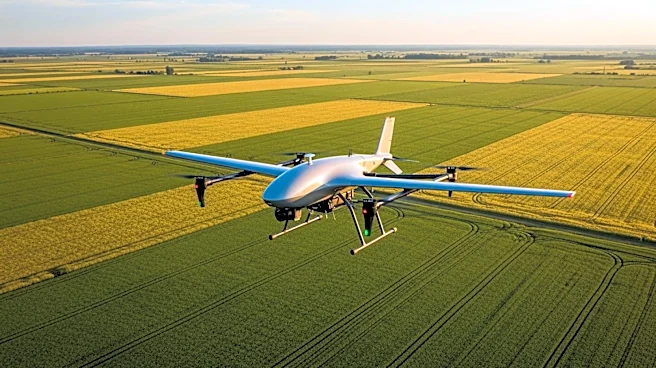
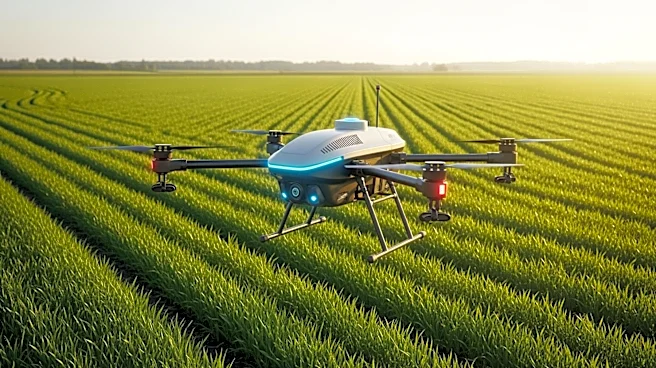
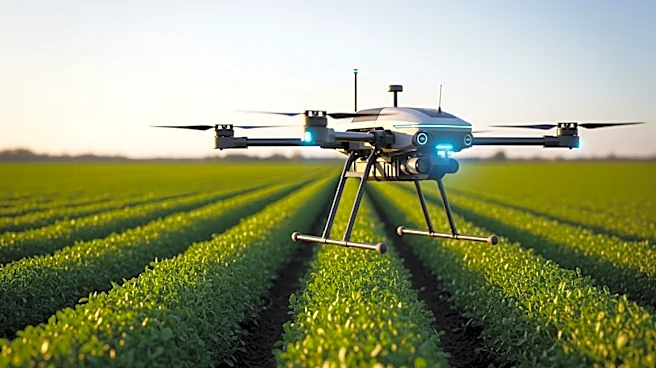
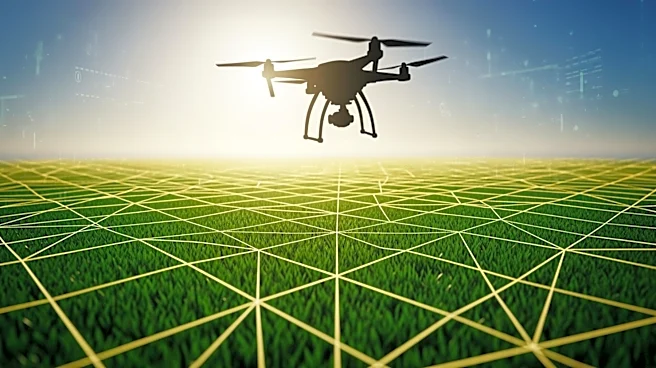
DroneDash Technologies and GEODNET have announced the launch of GEODASH Aerosystems, a joint venture aimed at revolutionizing agricultural spraying with AI-driven drones. The new platform eliminates the need for manual pre-mapping by using real-time AI Vision
and RTK positioning, allowing drones to dynamically adapt during flight. This innovation is designed to enhance efficiency and reduce costs in large-scale farming operations. The drones are equipped with AI Smart Farming systems that transform each flight into a data-collection activity, providing insights into crop health and optimizing agronomic decisions. The venture targets industrial agriculture markets, including oil palm plantations in Southeast Asia and various crop operations in the United States.
Why It's Important?
The introduction of GEODASH Aerosystems represents a significant advancement in precision agriculture, offering a more efficient and intelligent approach to crop management. By integrating AI and real-time data analytics, the platform addresses the limitations of conventional agricultural drones, such as the need for repeated manual mapping. This development is poised to improve productivity and sustainability in agriculture by enabling faster deployment and more precise application of resources. The ability to gather continuous agronomic intelligence during operations can lead to better decision-making and resource management, ultimately benefiting farmers and the agricultural industry as a whole.
What's Next?
GEODASH Aerosystems plans to commence commercial deployment in Q3 2026, following pilot deployments and system validation. The focus will be on markets where precision and adaptability are crucial, such as large-scale plantations and diverse crop environments. As the platform gains traction, it may drive further innovation in agricultural technology and encourage the adoption of AI-driven solutions across the industry. Regulatory approvals and manufacturing readiness will be key factors in the successful rollout of the technology. The venture's progress could also influence policy discussions around the use of AI and drones in agriculture.